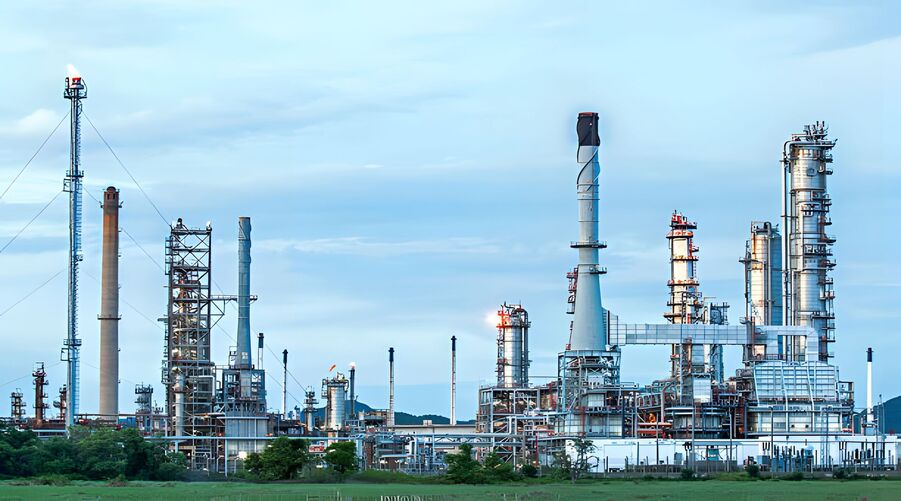
Shandong Hualu Hengsheng Group Co.,Ltd
Among Chinese chemical producers, Shandong Hualu Hengsheng draws attention not just for its scale, but for its steady hand in key commodity production like ammonia, urea, methanol, acetic acid, and beyond. In this industry, ramping up to millions of tons a year takes more than idle talk about process integration or plant layout. Our facility, like theirs, faces the deep challenge of balancing cost, consistency, and environmental compliance. The choices made at Hengsheng’s plants—raw material sourcing, heat recovery investment, catalyst selection—reflect the unglamorous realities of industrial chemistry, where keeping oxygen in the right part of a reactor can make the difference between profit and shutdown. China’s central role on the global fertilizer and methanol markets sweeps through every procurement meeting we hold. Shandong Hualu Hengsheng’s moves—how they tweak their gasification routes, secure local coal and natural gas contracts, capture byproduct CO₂—force many of us to question old assumptions. For years, the idea was simple: crank up production; meet demand. Now, nearby farmland, air quality indexes, and factory neighbors all voice concerns. The air and water emission targets grow tighter every year. On our own lines, we see real benefits from copying some of the integrated wastewater and off-gas recovery schemes that companies like Hengsheng have made work. Sometimes, downstream customers demand a traceable reduction in the carbon intensity of their supply. If Hengsheng manages to shave a few percent from process energy input with better heat exchangers or a more refined amine system, they don’t just save money—they keep pace with a new normal. The press rarely talks about crew turnover, training programs, and hands-on engineering judgment, but these factors hit us hard every quarter. So much focus falls on the number of plants Shandong Hualu Hengsheng operates or their output volumes, but in daily practice, the most valuable assets never leave the site at shift change. Skill with operating control logic during startups, a sixth sense for when a compressor needs troubleshooting instead of a major teardown, and the knowledge to smell a subtle leak of synthesis gas—these keep production smooth and safe. Their reported investments in technical schools and in-house apprenticeship programs catch our attention not as a PR move, but as insurance policies. Every safe day—no matter how large the site—protects more than reputations. Supply chain shocks from the pandemic, and sudden changes in import and export rules, hit hardest in large-scale commodity chemicals. Months of interrupted logistics left us with costly excesses in some raw materials and shortages in others. Large players like Hengsheng can leverage longer-term offtake deals or tide over price swings more easily, but even they have been caught by abrupt restrictions or surprise audits. Their public cooperation with regional and national policy changes often signals what’s coming for the rest of us. When they commit to complete resource recycling in a new process park, or respond to “dual carbon” policy calls, competitors take note. Efficiency improvements that once meant stricter column insulation or a new fractionator now stretch to onsite green energy adoption or pilot programs for renewable hydrogen blending. We follow their progress knowing that large-scale implementation there often sets practical standards for the rest of us, not theoretical benchmarks. Global chemical trade depends on trusted partnerships and transparent communication. Deals with companies in Southeast Asia, Europe, and the Americas often reference suppliers like Hualu Hengsheng as a yardstick, for both cost efficiency and reliability. Their direct shipping records, reach into global container ports, and ability to provide traced product documentation reveal the difference between rumors and reality. In our own experience, customers ask pointed questions about quality consistency, environmental track record, and long-term price stability, which large groups often navigate with more concrete answers than speculation. Yet the risk here runs both ways. If a key player gets caught in a regulatory scandal, falters in QA, or misses a contractual shipment, repercussions ripple throughout the sector. We benchmark our own checks—third-party audits, online data sharing, community engagement—based on hard outcomes rather than aspirational promises. Inside Chinese chemical circles, complacency means falling behind. Operators keep up not just by pushing more molecules per day, but by adapting to relentless policy changes, tightening environmental limits, and shifting global demand. Watching how Shandong Hualu Hengsheng upgrades process trains, expands into newer chemical chains, and stays engaged with both regional governments and tech enterprises, we know that this game values results over rhetoric. Learning from those moves—adopting their practical energy-saving upgrades, adding advanced monitoring tools, and investing in the next generation of plant operators—directly shapes our own survival. In a world where change accelerates each year, those who move faster without cutting corners set the next pace for everyone else. Contact Information:Website:https://www.hualu-hengsheng.com/Email:sales4@ascent-chem.commobile:+8615365186327whatsapp:+8615365186327