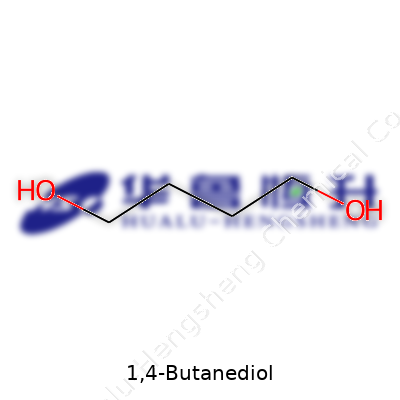
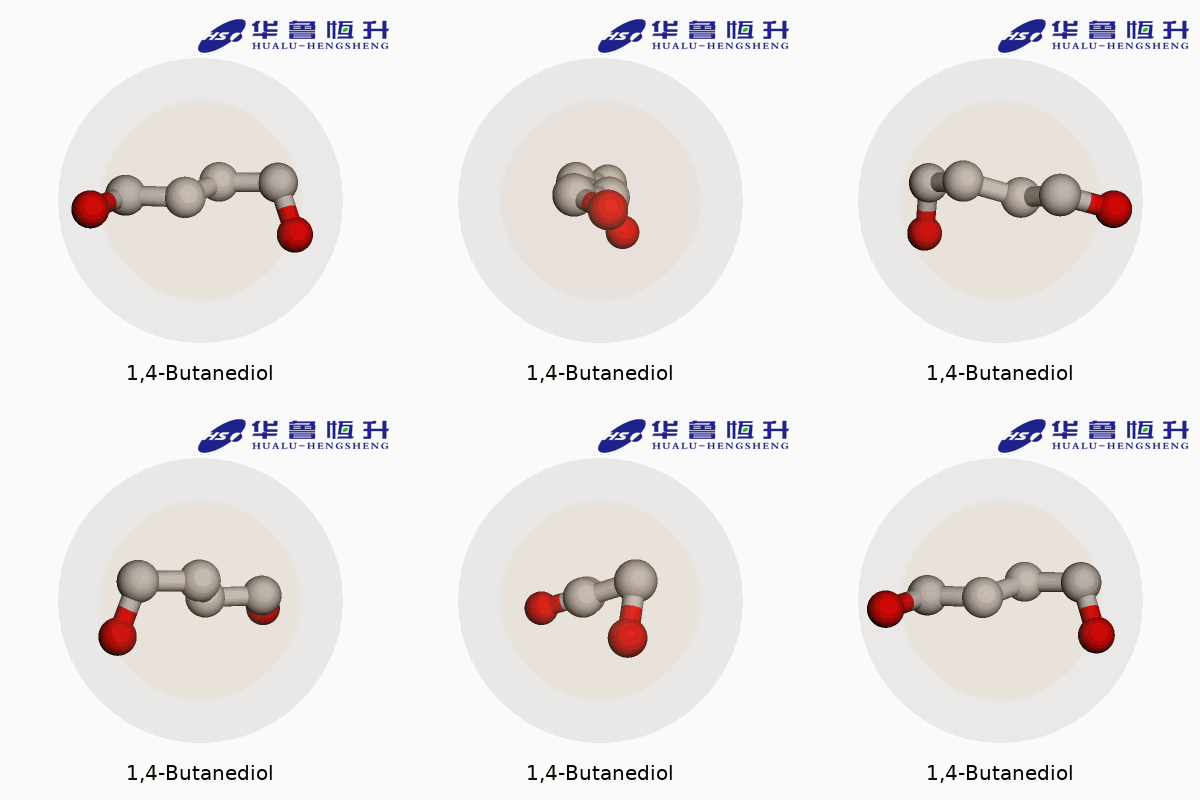
1,4-Butanediol has a long story, stretching back to developments in organic synthesis that took off in the early twentieth century. Early on, researchers realized that simple diols could shape the course of industrial chemistry. Over decades, makers honed their methods, shifting from the Reppe process, which uses acetylene and formaldehyde under pressure, to variants based on petrochemicals like butadiene and maleic anhydride. Each step in production echoes changing resource access and regulation. With more global focus on hazardous raw materials, manufacturing adjusted away from acetylene routes, moved toward processes using safer inputs, and gradually improved the purity profile. Over the years, our own plants moved from batch to continuous processes, not only keeping workers safer but increasing yield. Internally, we have faced—and worked through—raw material volatility, shifts in environmental standards, and the constant pressure to reduce residual aldehydes, since purity in synthesis makes downstream reactions possible. No matter how broad the landscape of organic chemicals, only a few, like 1,4-butanediol, sit at the intersection of plastics, solvents, and advanced materials, and its history reflects every bump in the industry’s road.
1,4-Butanediol appears as a colorless, oily liquid in the barrel. Our tanks hold the substance at carefully controlled temperatures to prevent crystallization—a reality for operators, less a matter of fact than assurance to the folks blending it on the plant floor. Many consider it a workhorse intermediate, both for our own downstream operations and as a backbone sold to other manufacturers. Our plant finds regular markets in polyester polyols (for spandex and flexible foams), tetrahydrofuran (THF) production, and engineering plastics like polybutylene terephthalate (PBT). Over the years, we tuned our final product purity, never treating color or odor as an afterthought; even minor traces of aldehydes or metal can gum up a customer’s catalytic processes, and on the phone, those complaints echo so much louder than any mention of on-spec delivery. Each drum, tote, and tanker is a reflection not just of our process, but of our reputation among technical and purchasing people downstream—most of whom rely on consistent, dependable chemical behavior more than glossy data sheets.
1,4-Butanediol boils around 230°C and freezes near 20°C, meaning plant operators have to mind the insulation when winter rolls around. With a flashpoint over 120°C and a vapor pressure low enough to keep workplace air free from heavy concentrations, the substance behaves quietly in storage, but every shift in physical state can sneak up on the unwary—especially if a transfer line goes cold, and the liquid turns waxy, clogging valves. Solubility in water runs high, making spills straightforward to dilute but difficult to recover by skimming or separation. Over the years in our operations, we've learned these details dictate more of our day-to-day than formal training suggests. Technical staff monitor any trace of peroxide formation when exposed to air; even though incidents are rare, safe handling widens every operator’s margin. Recognizing all these facts ensures materials get where they’re needed, safely, day or night.
In production, purity often comes down to decimal points, with our teams targeting over 99.5% content, limiting water and carbonyls to below 100 ppm, and tracking even color on the APHA scale. Trace acidity, often measured in mg KOH/kg, drives corrosion risks in systems. Our labels comply with global hazard codes, listing hazards like skin and eye irritation, providing transport markers for flammable liquids, and displaying key safety pictograms. We rarely see mishandling of the product by customers, reflecting not just downstream vigilance but the clear, direct instructions honed from decades of incident reviews. Regulatory compliance relies as much on the experience-driven subtlety of seasoned operators as on the expectations of external auditors.
Our teams moved from acetylene-based routes, which rely on copper-catalyzed addition of formaldehyde, to hydrogenation of maleic anhydride or succinic acid over supported metal catalysts. Each method brings trade-offs in yield, process economics, and risk profile; acetylene, though efficient, carries explosion hazards in the presence of air, while maleic anhydride hydrogenation links best with refineries already built to handle aromatic chemicals. Early days saw lots of spilled product, corroded pumps, and more downtime, but changes in catalyst quality and reactor design boosted throughput and simplified waste treatment. Every operator in our plant recognizes the headache a bad batch causes: impurities drag down reactors, downstream lines clog, and customer trust erodes faster than shipments leave the facility. So every batch run reflects not just chemistry, but collective care from engineering to instrumentation.
A molecule with two primary hydroxyl groups invites transformation. In our labs and pilot plants, we convert it to tetrahydrofuran using acidic dehydration, supporting the fibers sector. Alkylation and esterification open paths toward polyurethane feedstocks, printing ink solvents, and plasticizers. Oxidation routes generate gamma-butyrolactone, itself a vital intermediate in electronics and specialty polymers. Nitration, halogenation, and etherification all see their day, especially for customers seeking custom molecular scaffolds. These reactions, familiar though they may become to technical staff, remain sensitive to impurities: a single ten-liter batch with unusual impurities from upstream can yield pounds of off-grade byproduct, and every such case drives home the importance of vigilance in both incoming quality checks and careful operation of fixed-bed reactors.
The chemical often appears as 1,4-BDO, Butane-1,4-diol, or simply BDO. Laboratories still use "tetramethylene glycol" in older procedures. Each name may trigger different expectations: procurement wants consistency with their vendor codes, while plant managers watch for accidental mix-ups with similar-sounding diols. In our operation, training new staff on these naming conventions isn't a formality—it keeps alkylation yields up, ensures safety data ends up attached to the right containers, and prevents costly tank misloads.
Our plant follows chemical handling protocols developed over decades. BDO demands splash-proof gloves, goggles, and face shields, not only from regulatory pressure but from hard-won experience. Operators remember the skin irritation from the odd splash, and once someone goes home with a rash, news travels fast. Closed transfer systems, local exhaust at blending stations, and careful labeling at pumps and valves reduce both acute and chronic exposure. Operators watch the line temperature to prevent freezing and avoid overpressurizing vessels as BDO slowly expands. While lethal incidents remain rare, every minor deviation from standard practice—spilled drums, missed wash-downs, late maintenance—brings lessons we pass to the next crew. Constant review of incident logs and near-misses, not just heavy-handed rules, have built a safety culture more resilient than shifting compliance paperwork.
BDO goes to work building stronger plastics, elastomers, solvents, and specialty polymers. Flexible polyurethane foams, high-performance fibers like spandex, tough PBT plastics, and industrial solvents all rely on it. In our facility, supply planners see seasonal spikes as the construction and textile cycles shift. Customers making spandex expect tight performance windows—if any batch introduces irregular chain length distributions, the resulting material snaps in unexpected ways or over-stretches in processing. For THF production, even a small leap in aldehyde content sends polymerization rates awry and clogs reactor internals. So every product delivery means more than moving barrels: it carries the weight of hundreds of manufacturers relying on exact composition, day after day.
Recent years pushed our teams to tighten environmental releases, maximize raw material efficiency, and anticipate regulatory shifts toward renewable chemicals. R&D efforts look into bio-based sources, leveraging sugars or succinic acid from fermentation, a route promising for both sustainability and supply diversification. Teams compare catalyst lifetimes, reaction selectivities, and downstream impact on critical application areas. Old lab notebooks document endless tweaks—altered reactor temperatures, new hydrogenation supports, changes in purification solvent. Researchers monitor byproducts and their impact on end use, not glossing over trace contaminants. Each improvement inches the whole operation ahead. Currently, a smaller but growing portion of our production comes from bio-catalytic methods, and early performance results show promise, but scaling remains a challenge. On the other hand, process engineers see potential in smart instrumentation—real-time analytics to catch deviations before they leave the plant. Collective learning, not just individual breakthroughs, keeps the process robust through new regulations and demands.
Years of studies document moderate toxicity. Ingesting BDO brings metabolic conversion to gamma-hydroxybutyrate, raising health risks seen in some unregulated settings. Inhalation, less of an issue due to low vapor pressure, carries mild hazard. The major risks in our experience come from volume exposure—handling mistakes, pump leaks, and splashes—where acute toxicity is less concern than chronic exposure and accidents. We monitor workplace concentration, support employee health screening, and update operators with the latest toxicological data. Regulatory review cycles feel long but vital as new findings might emerge. Past incidents inform safety briefings, encouraging habits that go beyond checklists, so folk on the ground grasp the why behind every procedure and treat the substance with deserved caution.
Every year, conversations with industry colleagues circle back to feedstock volatility, sustainability, and new markets. Expectations for green chemistry only rise. Internal projects study fermentation-based BDO, a leap that could sharply cut petroleum reliance but still needs scale to compete. Engineering teams look into reducing water and energy use per ton of product, watching for breakthroughs in catalyst efficiency and closed-loop processing. For now, specialty polymer and solvent demand climbs, driven by automotive lightweighting, electronics, and sustainable fibers. At the same time, hazard regulation tightens, so every process adjustment pursues safety and mitigates tighter scrutiny. The next decade may see BDO made from renewable feedstocks dominate sectors like packaging and green textiles. All these shifts demand steady attention, clear-eyed assessment of process capability, and willingness to invest where chemistry and safety come together.
Every day in our plant, barrels of 1,4-butanediol roll out the door headed for manufacturers that drive modern life. This is a chemical we don’t take lightly. Speak to anyone from our team, and they’ll describe its place in thousands of different products. The sheer range of end uses keeps our production lines humming—spanning from basic plastics to spandex threads in athletic wear, coatings, and more.
Years ago, we watched demand spike as polyurethane materials took over everything from car seats to shoe soles. Polyurethanes owe their comfort, resilience, and structure to stretchable polymers made via 1,4-butanediol, typically as polybutylene terephthalate (PBT) and thermoplastic polyurethanes (TPU). Every ton we ship underpins softer, lighter, and tougher materials found in high-performance goods. Car makers and electronics giants rely on these polymers for housings, connectors, and wire insulation due to the strength and flexibility they deliver.
Another group of customers orders 1,4-butanediol for solvent applications. In our own finishing processes, we see firsthand how it keeps paints and coatings workable and smooth. High-purity grades keep electronics and optoelectronics lines free of defects. Its role as an intermediate in the production of tetrahydrofuran (THF) shows up again in the creation of strong, flexible fibers—especially spandex. Fitness clothing and sports gear live up to promises of stretch and comfort thanks to these fibers. That journey from chemical reactor to putting on running shoes never ceases to impress me.
A vast segment of the resin industry counts on 1,4-butanediol. Epoxy resins used in coatings for floors and factory equipment gain improved flexibility and toughness because of butanediol-based curing agents. In adhesives, packaging remains tightly sealed despite temperature swings or mechanical stress. The automotive field still depends on corrosion-resistant plastics formed with these intermediates. That’s not a distant-world concern; scratches and dings in the average family car highlight the lasting value of these chemical roots.
Producing 1,4-butanediol puts us under the microscope for environmental responsibility. Our investments in waste control, reactor efficiency, and recycling reduce both emissions and raw material consumption. Chemical manufacturing can’t cut corners; every step draws on decades of risk control. Any error compromises worker safety and disrupts the supply chain down the road. Educating staff and monitoring equipment 24/7 create confidence in every shipment, reassuring both downstream partners and final consumers.
Today’s global push for lower-carbon solutions increases pressure on manufacturers like us to innovate. Developing bio-based sources for 1,4-butanediol remains a top R&D priority. Our research team is on the front line, combining industrial experience with science to bring more sustainable options to market without sacrificing performance. The challenge means embracing new feedstocks and better process controls, building on a legacy of dependable, high-quality production.
1,4-Butanediol gets attention whenever safety concerns make headlines. As a chemical manufacturer using and producing this substance every day, I know the reality strays far from the public buzz. This colorless liquid forms the backbone for many industrial processes—an important building block in plastics like polybutylene terephthalate, spandex fibers, and certain elastomers. Plenty of folks never see the raw material, but they benefit from its presence in everyday items, from car dashboards to phone chargers.
Beyond the factory fence, though, some are uneasy about health risks. This concern isn’t unfounded. Accidental contact with skin or eyes leads to irritation. Inhalation of vapors can cause headaches or dizziness, especially if ventilation falls short. Ingestion brings real danger, even in small quantities, acting as a central nervous system depressant. Cases of misuse have occurred, mostly through unsanctioned consumption, sometimes resulting in severe poisoning. These aren’t minor footnotes; they’re reminders that handling chemicals always demands respect and a grounded sense of responsibility.
On the production floor, these safety risks shape every decision. Engineering controls, like sealed transfer lines and robust extraction systems, serve as the front line. Every team member gets thorough training before stepping near a production vessel or transfer area. The right gloves, goggles, and protective suits line our workstations, and regular drills keep safety routines fresh. Regular environmental monitoring also tracks for leaks, making sure the air stays well within accepted exposure limits. You don’t cut corners with these controls, not just to follow rules, but because people’s health depends on them.
Over years in this trade, I’ve watched regulations get tighter across jurisdictions. Agencies including the EPA and OSHA don’t hesitate to levy penalties for breaches. As a chemist or plant worker, the cost of complacency hits home immediately in spill response or medical incidents—these are personal stories, not policy documents. We can’t blame the chemical for misuse outside of the plant, but our responsibility stretches to providing clear guidance to downstream users. Straightforward safety data sheets, detailed training programs for customers, and regular check-ins reduce the chance of harm after our material leaves the warehouse.
No small company can ignore the shadow of illicit markets. Some people seek out 1,4-butanediol as a recreational substance, exploiting its conversion in the body to gamma-hydroxybutyrate (GHB). The risks of overdose include respiratory depression and unconsciousness, sometimes tragically fatal. This misuse lies beyond legitimate manufacturing, but we share in the duty to control supply, track shipments, and report suspicious activity. Our business trains logistics teams to spot red flags and works closely with law enforcement whenever necessary. Compliance isn’t just red tape—it helps shield the public from real harm.
1,4-Butanediol isn’t a villain in the chemical world, but it’s no household ingredient either. Respecting its hazards, following procedures, and using know-how built from experience keep people safe. Done right, this material remains a workhorse in modern industry. Listening to the science, refining protections, and being candid about risk set the bar for safety—both in the plant and beyond.
After decades making 1,4-Butanediol, the challenges of storage never fade into the background. This liquid likes to stay stable, but only if given respect—and manufacturers learn that early. Over the years, we’ve seen problems turn up fast where a storage space is too warm, too humid, or just doesn’t keep air out. Every operator who works alongside large drums or bulk tanks knows how tight temperature control matters. Even moderate heat can push this chemical to degrade, create pressure, and in rare cases, trigger container problems. If you store a thousand tons a year, experience teaches you to keep things cool and away from sunlight. Direct sun on steel drums tends to spell trouble.
1,4-Butanediol draws in water from the air. Let that happen, and product purity suffers. Water invites unwanted side reactions, leading to haziness or by-products in processes downstream. In our own plants, we never cut corners on tightly sealing drums and ensuring transfer lines have inert gas blanketing, especially for larger tank farms. Skipping that step led to more than one tank of off-spec inventory early in our journey. Our customers demand clean material, and quality starts with keeping moisture out.
We’ve spent enough time replacing corroded fittings to know material compatibility matters. Stainless steel, with the right gasket materials, often wins out for bulk storage and transfer. Some grades of regular steel rust quickly when exposed, and plastics in lines or seals sometimes degrade over time, starting quiet and leading to loss. Each flaw comes back to cost. Our maintenance teams keep close watch for early signs of swelling seals or pitting tanks to dodge downtime or contamination.
Though 1,4-Butanediol doesn’t ignite as easily as some solvents, it still burns if things go wrong. An old colleague once said, “It may take some work, but if there’s enough heat, anything burns.” Our storage rooms keep their distance from open flames or high-heat equipment, and we install ventilation with sensors that track vapors at levels well below any risk. In case of a leak, we station spill kits and train our responders, working with local fire crews to know the lay of the land. Every new hire walks through that routine, because one confused moment can mean lost hours or worse.
Routine may seem dull, but in plant work it saves real money. Gauges in the tanks get checked morning and night. Drum inventories are logged for date, batch, and temperature. If condensation appears, maintenance pulls that unit off the line, not just for lab checks but for inspection of seal integrity. This habit sets apart a plant that gets through the year without complaint from one that faces unexpected shutdowns or rework.
Consistent product quality reflects what happens long before the reactor runs. Storing 1,4-Butanediol with care lets downstream users avoid headaches and gives us fewer calls to troubleshoot. Over the years, we’ve moved from patchwork storage to tightly controlled, conditioned warehouses—and it’s paid off in smoother supply chains, higher uptime, and far less waste.
The best practices come from hard lessons. The plant always remembers a 10,000-liter tank spoiled by a loose flange or condensation found too late. Every drum we ship carries the promise of work done right, starting the moment it arrives and rests safely, away from heat, humidity, and risk.
As a manufacturer making 1,4-butanediol (BDO), I see stories crop up asking, “Is it legal to buy or have this chemical?” It’s a question with a story behind it—one involving every step of production, use, and law. For industrial chemical makers, the answer circles back to why, how, and for whom BDO gets made. This chemical isn't just a name on a label. It enables polyurethane plastics, elastic fibers for sportswear, solvents in electronics, and pharmaceuticals. At the scale we handle it, safety isn’t a guideline; it’s a daily checklist.
Government rules about 1,4-butanediol center on risk. In countries like the US, there’s no federal law outright banning its manufacture, controlled industrial use, or sale to vetted businesses. As of now, it’s not on the Controlled Substances Act’s main schedule as a standalone substance. This aligns with what we see in the European Union, Japan, and other regions in the global supply chain. But these laws always come with a question mark—a focus on intent and vigilance. If someone tries to use BDO as a recreational drug precursor, or as an ingredient in unauthorized consumer products, law enforcement pays close attention. That’s because BDO, in the wrong hands, can convert into gamma-hydroxybutyrate (GHB), which is strictly illegal to possess or sell for human consumption in most jurisdictions worldwide.
Factories, research labs, and product developers can buy and use BDO after robust screening. Our customers must give proper identification, business credentials, and end-use declarations. These checks aren’t red tape; they help trace who holds what. Purchases for legitimate, disclosed manufacturing have little interference from authorities—because traceability stays intact, and record-keeping prevents diversion. Trying to buy as a private individual paints a different picture. Retail outlets and general suppliers steer clear. Regulatory bodies treat non-commercial acquisitions with high suspicion, especially in light of publicized misuse cases. If a shipment heads to a residential address, we flag and halt it. That’s an industry norm, not just our policy.
Because BDO isn’t labeled a narcotic or directly scheduled, some claim it’s legal in all settings. This is misleading. State and local governments can add restrictions based on community incidents or abuse. Customs agencies review containers, papers, and buyer information, watching for inconsistencies. For instance, Chinese and US authorities scrutinize any export/import and can seize shipments if paperwork doesn’t add up. Some countries require a permit or specific license before import, even for industrial purposes. Each time the rules shift, we adjust logistics, retrain staff, and keep compliance officers ready for new paperwork. We’ve seen loads delayed or blocked entirely when buyers can’t justify their purchase with documentation.
Close communication with regulators, clarity with buyers, and a mindset where safety and legality outweigh sales targets get results. We provide training and support for end-users, not just a sale and goodbye. When governments launch new guidelines, we update our audits and update our process for screening. Real supply chains build trust through transparency and readiness to say “no” to risky deals, even if it means lost revenue. As BDO's chemistry kinds stays in demand, keeping it legal, productive, and safe takes partnership between manufacturers, law enforcement, legitimate industries, and communities. Cut corners, and the consequences land on everyone’s doorstep. For us, the legal landscape for BDO remains a moving target. Staying responsible isn’t a choice; it’s the way the business stays open.
Work with 1,4-Butanediol teaches a lot about chemical safety. Many years in the business reveal that theory and real-world experience don’t always match up. This chemical attracts attention for its efficiency in industrial syntheses and polymer work. In the plant, though, safety has to come first. 1,4-Butanediol looks harmless—it's colorless and has a faint odor. That can be misleading. A clear liquid can lull even experienced hands into letting down their guard, but overlooked contact or inhalation causes trouble. So, practical, direct safety measures always come before shortcuts or assumptions.
Gloves, goggles, and proper clothing serve as the first barrier. Disposable nitrile gloves work well because 1,4-Butanediol gradually seeps through weaker materials. Chemical splash goggles outperform safety glasses when pouring from drums or sampling tanks. Uncovered skin, especially around wrists or neck, leads to irritation or worse, so long-sleeved lab coats and aprons remain standard issue. Proper footwear with closed toes and non-slip soles helps, particularly on rainy days or when past spills haven’t been mopped perfectly.
People tend to overlook air handling, but the right hood or exhaust makes a difference. In our own plant, simple exhaust fans once vented the work area, and headaches among the shift crew ran high. After upgrading to a forced-air system above filling stations, complaints faded and incident reports dropped. 1,4-Butanediol vapor appears mild but builds up quickly in closed environments. Every time the fresh air system undergoes maintenance, a spike in smell or reports reminds us why ventilation must never slide.
Safety meetings can grow repetitive if they drift into general warnings. Turning training into walkthroughs at the line while showing real leaks or clogged valves keeps attention focused. We drill emergency procedures with actual spill kits in hand and sample the absorbents with water to show how fast they wick up liquid. Anyone new joins a seasoned hand for their first few tank fills to point out subtle risks—slippery hands, broken drum seals, or dripping valves rarely show on paperwork but make the difference between a safe shift and an incident.
Big spills rarely come with warning. Drip-pans under drums, double-walled storage tanks, and bunded containment inside delivery bays cut down on surprise leaks reaching drains. Steel or HDPE containers match best with 1,4-Butanediol, never old metal drums which rust or flake over time. We keep chemical absorbents at every fill point and drill with them: granular agents soak up more than rags or paper towels, forming a safe-medium for scooping up residue.
One lesson stands above all: no one works alone with 1,4-Butanediol. From seasoned chemist to entry-level operator, everyone speaks up if process changes. Labeling tanks and lines with clear, simple tags eliminates confusion. Mislabeling causes more headaches than complex chemistry. If a valve, seal, or pump needs attention, we post paper notes—digital logs rarely catch the eye during busy shift changes. That in-person word shifts responsibility from the system to the person, which never fails in practice.
Constant vigilance keeps the line running and the workforce healthy. Protective gear, proper ventilation, and solid teamwork keep accidents rare. Improvements never stop; experience in the field drives countless small changes, all adding up to safer days and fewer surprises.