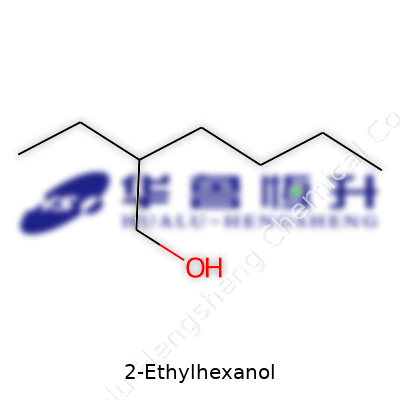
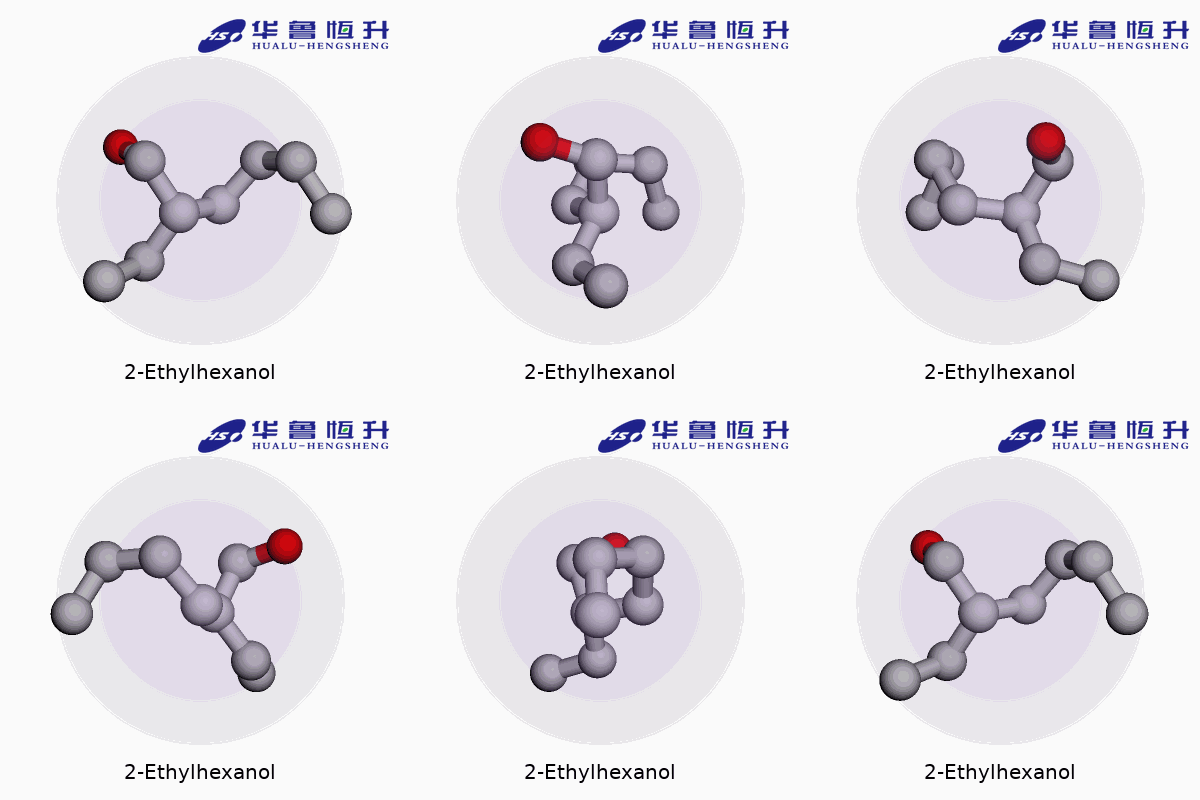
Our plant began large-scale production of 2-ethylhexanol decades ago, shortly after its routes became commercially viable. Back then, demand for plasticizers in vinyl products and coatings prompted a wave of innovation in oxo alcohol technology. Industry at the time leaned on petroleum feedstocks, and the hydroformylation process (oxo process) turned out to be a gamechanger. Over time, our teams refined both yield and purity, shaping how this chemical supported everything from flexible PVC to lubricants. The transformation from low-scale experimental work to full tanks running round-the-clock demanded real-world problem-solving — gear fouling, catalyst performance, and logistics had to keep up with fast-growing customer orders from cable makers, flooring manufacturers, and specialty chemical producers.
2-Ethylhexanol, commonly referred to as 2-EH within the industry, plays a vital role in many chemical value chains. It is a clear, almost water-white liquid with a mild characteristic odor. At the plant, we produce it in bulk for a wide variety of downstream applications, not only as a key ingredient in plasticizer production, but also in surfactants, lubricants, and coatings. Our customers rely on us for high-purity batches that perform consistently under their demanding process conditions.
This compound, bearing the formula C8H18O, boils at about 184 degrees Celsius and maintains a melting point just below freezing. It dissolves only slightly in water but shows high miscibility with common organic solvents, which makes it especially useful for manufacturers working with complex mixtures. One challenge in production lies in minimizing impurities, particularly aldehydes and other by-products, since these can compromise downstream applications like plasticizer performance in medical tubing or food contact materials. We run advanced analytical checks on every lot, leveraging gas chromatography and other instrumentation to confirm our product meets strict color, moisture, and odor metrics.
Label requirements shaped by regulations such as TSCA and REACH matter just as much as technical metrics. Our shipping containers must detail net content, batch identification, and hazard statements, including flammability and potential environmental impacts. Operators—both in the warehouse and loading dock—receive periodic training to prevent cross-contamination, mislabeling, or accidental exposure. Consistency builds reputations in this sector; labels need to match MSDS sheets word-for-word to avoid misunderstandings in safety audits or customs inspections.
Every kilogram of 2-ethylhexanol that leaves our facility starts from propylene and syngas. Our oxo process, developed after continuous investment and tuning, reacts propylene with carbon monoxide and hydrogen to build up the molecular backbone. Subsequent hydrogenation steps clean up unwanted by-products, and careful distillation helps isolate the pure 2-EH. Temperature, pressure, and catalyst selection dictate how efficiently we can run; downtime for catalyst change-out or heat exchanger fouling costs real money. We monitor everything with a tight digital control system, bringing decades of plant know-how into play. Even small tweaks, such as switching batches of propylene feedstock or catalyst lots, ripple through the entire operation, so we maintain a robust logbook.
The real value of 2-ethylhexanol lies in its ability to serve as a building block for esters—particularly dioctyl phthalate, trioctyl trimellitate, and other plasticizers crucial for softness and flexibility in PVC. Esterification processes require high-purity alcohol, acid catalysts, and controlled reaction environments. In addition, 2-EH acts as an intermediate for various surfactants and lubricant additives, providing improved flow and oxidative stability. Chemical teams spend significant time optimizing yields and tailoring properties to each customer’s spec—one batch destined for brake fluid may need perfectly controlled moisture content, while another for textile coatings must meet color standards year-round.
On shipments, bills of lading, and regulatory paperwork, the same substance goes by many names: 2-Ethylhexanol, 2-EH, 2-Ethyl-1-hexanol, octanol-2, and even the sometimes-confusing Isooctanol in older documents. Over time, we transitioned all documentation to IUPAC conventions, but old habits persist in procurement circles, so training staff on this nomenclature prevents costly mispick errors or confusion on incoming raw material checks. International orders further complicate matters, with various customs authorities and end-users referring to their own legacy product codes or translations.
Health and safety remain at the core of everything in the plant. 2-Ethylhexanol requires careful handling—its vapor carries potential for respiratory irritation, and its high flash point still demands rigorous controls to prevent sparking or ignition. Our standard loading procedures rely on closed-loop systems and vapor recovery, and every pump operator is trained on spill response protocols. We participate in industry stewardship programs to keep pace with global standards. Annual audits, both internal and from third-party inspectors, push us to continually improve containment and exposure thresholds. Mistakes or lapses can trigger recalls or environmental non-compliance, so our line supervisors and safety officers track every near-miss as an opportunity for learning. Ongoing investment in air handling, PPE, and emergency drills pays real dividends in safety and reliability.
2-Ethylhexanol continues to anchor diverse sectors. Plasticizer clients account for the lion’s share, using our product to boost the workability of PVC for medical devices, solvent cements, and wire insulation. Major coatings producers rely on our batches as a coalescent in high-performance acrylic formulations. Automotive and machinery firms require 2-EH-based lubricants to minimize metal-on-metal wear; custom esters made from our alcohol extend drain intervals and resist heat breakdown. Surfactant makers lean on our high-purity output to improve detergency and foaming properties in household and industrial cleaning brands. Each sector demands unique delivery formats, packaging sizes, and response times for troubleshooting—our technical service teams work hand in hand with R&D to adapt and solve new use cases. In textile finishing, for example, highly consistent performance batch-to-batch translates into fewer product claims and happier end customers.
Continuous improvement drives every upgrade at our site. R&D teams test new catalysts in the pilot plant, looking to reduce unwanted by-product formation or boost conversion rates. Our cooperation with academic partners brings in new ideas for alternative feeds and greener catalysts. Several years back, we introduced digital sensors and predictive maintenance tools—these investments cut downtime and improved yield statistics. Academic and commercial labs occasionally request specialty grades of 2-EH for new plasticizer molecules, biodegradable lubricants, or surfactant structures. Each run becomes an experiment in scaling up benchtop concepts to real-world output. Developing low-carbon or bio-based production routes has become a major research thrust, reflecting end-user and regulatory demands for sustainability.
Toxicology work, both within our labs and in industry-wide consortia, shaped handling protocols and product positioning. 2-Ethylhexanol shows limited acute toxicity in standard animal studies, yet repeated exposure—mainly via inhalation or skin contact—requires controls and regular health checks for production staff. Environmental fate studies show moderate biodegradability under aerobic conditions, but spill containment and wastewater treatment stay top of mind. Each waste stream is tested prior to release into municipal systems, complying with all relevant emissions and discharge limits. We track evolving research and regulatory restrictions to stay ahead of global market compliance and avoid supply disruptions for our long-time customers.
Sustainability remains the main challenge and opportunity for our future 2-ethylhexanol operations. Petrochemical markets face increasing cost volatility and regulatory scrutiny. The shift toward bio-based or recycled feedstocks adds new variables. Technology for direct fermentation or biocatalytic upgrading may offer pathways for greener production, but scale-up, consistency, and certification demand time, investment, and practical experience. Our engineering and development teams run feasibility studies, test alternative raw materials, and explore energy integration options for both economic and environmental competitiveness. Downstream innovation marches on—customers require low-migration, food-contact safe plasticizers; specialty coatings evolve for electric vehicles and smart devices; detergents need improved biodegradability and lower aquatic toxicity. Meeting these market changes with flexible, reliable production and a deep bench of technical expertise keeps our factory, and the product itself, relevant and valuable. By pairing operational discipline with active listening to customer feedback, we continue to innovate and deliver on promises forged over decades of experience with 2-ethylhexanol.
In the world of bulk chemical production, 2-ethylhexanol plays a crucial role that too often stays behind the curtain. In the plant, we see its versatility every day. It does much more than sit in a drum or flow through pipelines—it unlocks performance for major industries. Its use isn’t speculation or theory; it plays out in daily operations, with real impacts for PVC makers, coating specialists, and plasticizer blenders.
Most of what we produce travels to companies producing plasticizers, especially dioctyl phthalate (DOP) and other phthalate derivatives. These plasticizers make polyvinyl chloride (PVC) flexible. Think of cables, flooring, and synthetic leathers. These products stay in demand because infrastructure and automotive sectors count on materials that last under tough conditions. Demand for flexible PVC brings a steady workload to reactors and distillation columns in the plant.
Moving on to coatings and paints, 2-ethylhexanol steps up as a raw material for making acrylate and methacrylate esters. Coating manufacturers seek durable, weather-resistant surfaces that don’t fade or peel. 2-ethylhexanol contributes to those goals. By fine-tuning formulations, manufacturers achieve coatings resistant to UV light, moisture, and abrasion. Our work in manufacturing leads directly to these real-world trait improvements—visible on everything from skyscraper cladding to consumer electronics.
Further along the value chain, 2-ethylhexanol finds use in lubricants, surfactants, and specialty solvents. In hydraulic fluids, its derivatives offer better flow and stability under pressure—a necessity for both industrial manufacturing and heavy machinery in agriculture or mining. Defining technical requirements for each batch, rather than running a cookie-cutter process, presents daily challenges on the production floor. Success comes with meeting these standards reliably, aligning with what downstream users demand.
Handling 2-ethylhexanol in bulk requires experience and care. At industrial scales, the focus goes beyond mere containment of liquid or vapor. Operators must routinely check gaskets and transfer lines for leaks, knowing that exposure risks matter to both our staff and surrounding communities. Regulations have grown more stringent, reflecting greater awareness of worker and environmental safety. We've responded with constant equipment upgrades, monitoring emissions to ensure compliance and protect health.
Change in global trends, such as restrictions on certain plasticizers and the shift toward non-phthalate options, keeps us on our toes. Adapting production assets to deliver newer, safer alternatives means coordinating across departments and retraining operators. These investments are not made lightly, but long-term reliability and market access depend on them. Real-world demand drives what we make, not the other way around.
Operating a 2-ethylhexanol facility today isn’t about mindless repetition; it’s about precision, adaptation, and stewardship. Downstream customers expect top-quality intermediates—at prices that reflect both global cost pressure and the real expense of safe, compliant production. Decades of experience teach respect for what goes out the gate and careful attention to what arrives in raw tankers. Technology evolves, but basics remain: serve the user, protect the workforce, and keep the process clean.
As a chemical manufacturer dealing with 2-Ethylhexanol day in and day out, there’s no substitute for getting your hands dirty and seeing how this chemical behaves outside of an abstract datasheet. It’s a clear liquid with a mildly sweet, almost floral odor, something that’s easy to recognize even across a busy production floor. It doesn’t sound impressive until you try processing a batch during a humid summer and realize how easily those fumes rise, highlighting its relatively high vapor pressure for an alcohol with such a long carbon chain. Awareness of this helps avoid surprises, especially for operators working in poorly ventilated areas.
Temperature shifts play a bigger role than most assume. 2-Ethylhexanol boils just over 180°C, which seems forgiving, but its volatility starts to climb well before reaching that point. In storage tanks, we monitor temperature closely because unexpected vapor formation can throw off our balance between product recovery and safety. The compound’s low freezing point makes storage easier in colder months, sparing us from issues faced with high-melting alternatives.
Pouring this liquid day after day, you notice its viscosity: thicker than water but far from syrupy. This matters when pumping through narrow pipes or metering precise quantities for downstream processes. Any miscalculation can jam a line or overflow a vessel, causing both waste and downtime. Its hydrophobic nature means it doesn’t mix with water—an advantage during extraction but a hurdle when you need any water-based cleaning.
2-Ethylhexanol’s real strength comes from its reactive nature. In the plant, we use it in esterification reactions, particularly to synthesize plasticizers like dioctyl phthalate (DOP). This is not an accident—it possesses enough reactivity at the functional group to react predictably, and its structure builds in flexibility, which gets passed on to the final product. The alcohol’s branching keeps it liquid at room temperature, a feature that often translates into better performance for our plasticizing customers. If you’ve ever squeezed a soft PVC wire or handled a pliable flooring tile, odds are this molecule has played a role.
During oxidation, we observe its tendency to form esters and acids—factors we study closely because even trace byproducts can affect the color and odor of downstream goods. On several occasions, we’ve had to swap out catalyst systems or tweak reaction times to keep unwanted byproducts low.
Daily operations push us to bridge lab knowledge and factory reality. With 2-Ethylhexanol’s low flash point, static buildup and open flames cannot be tolerated. We ground every tank, check hoses for conductivity, and drill plant staff until safety procedures become muscle memory. Chemical-resistant gloves and eye protection are not optional accessories, especially since direct contact can cause skin irritation that lingers. Leak detection relies not just on instrumentation but also on experienced workers who can smell a problem before alarms trigger.
In large volumes, proper storage tanks are fitted with pressure-release valves and cooling jackets so we never end up with overpressurization or unwanted side reactions. We learned these lessons the hard way years back and haven’t forgotten since.
No chemical is perfect, and we’re always working to reduce emissions and handle waste. Advances in condensation recovery and distillation efficiency help us reclaim more product and cut losses. Regulations keep tightening, and rightly so; proactive monitoring gives us both a legal and environmental edge.
It comes down to respecting what you’re working with and refining every stage of handling. 2-Ethylhexanol isn’t just a material off a shelf; it’s the sum of years of hands-on experience, attention to detail, and a willingness to adapt whenever the chemistry throws a curveball.
Every drum of 2-Ethylhexanol rolling off our reactors represents years of chemical know-how and a clear understanding that health and safety rules are not empty rituals. The question about whether 2-Ethylhexanol poses a health risk to workers or communities never leaves our minds. As a producer, not a middleman, I see its entire journey from raw feedstocks to plasticizers and coatings.
2-Ethylhexanol isn’t something we treat casually. It’s a colorless liquid with a mild odor, used far beyond plasticizers and solvents: in surfactants, paint dryers, even some adhesives. We control vapors and routes of entry, not because regulations force us, but because years on the production floor teach respect for chronic exposure and acute effects. Inhalation of high vapor concentrations can irritate eyes, nose, or throat. Skin contact with liquid can dry or redden skin, sometimes causing dermatitis, especially for technicians handling open streams. Spills demand quick action. Inhalation at high levels for extended periods can affect the central nervous system and liver. There’s no substitute for wearing proper gloves, goggles, and using exhaust fans at critical handling points.
Decades of toxicological studies place 2-Ethylhexanol in a moderate risk category. Acute inhalation or ingestion may produce temporary symptoms. Long-term effects at chronic low levels, based on animal studies, can include minor liver changes or increased sensitivity in airways, mostly after high-dose repeated exposures. Such doses rarely appear in modern, well-controlled facilities. Regulatory authorities, including OSHA and the European Chemicals Agency, have published workplace exposure limits. We align our internal exposure thresholds to values below those recommendations. This creates a protected environment for everyone on-site. Public health data does not reflect increased risk for people living near well-managed plants, providing our staff and neighbors with confidence in our operations.
Chemical safety extends beyond compliance sheets. We engineer closed systems, automate most transfers, and install vapor recovery at loading racks. Leak detection and proper process ventilation show up in our capital budgets as investments, not as costs to dodge. We require every new operator to understand both the process chemistry and the routes toxicants travel. Occasional odors in storage areas mean maintenance, not air fresheners. Safety audits can always find something to correct, and new technology offers better monitoring and containment.
No chemical, including 2-Ethylhexanol, deserves a blanket label as “safe” or “hazardous.” Safety hinges on thoughtful controls—exposure limits, training, design, emergency response. As a manufacturer, I see risk as a moving target shaped by real practices, not abstract probabilities. We trust the evolving scientific literature, listen to our workforce, and watch the market for safer substitutes or improved engineering solutions. Responsible manufacturers err on the side of caution far beyond legal minimums. If health concerns arise, industry and regulators must act quickly and transparently and manufacturers like us must lead.
Few topics spark as many internal audits at our facility as 2-ethylhexanol storage. It’s clear after years of direct handling that a smooth operation depends on getting this part right. The liquid’s volatility is manageable, but slip-ups lead to costly problems. Oversight in storage can create contamination risks, or worse, safety hazards for our workers. We keep tanks fitted with tight seals and pressure-vacuum vents. Exposure to moisture ruins batches, so we check for condensation and keep the tanks indoors away from temperature swings. Many of the best practices come from real-life mistakes—a leaking gasket or an unmarked tank taught us to double-check every transfer and always label lines.
2-Ethylhexanol doesn’t freeze at normal temperatures, though its vapor can build up as the mercury climbs. If we ever left a transfer line baking in the sun or stashed barrels where a heater malfunctions, vapor pressure builds quickly. Several years back, an outside drum developed a bulge—this was our wake-up call. Now, we record temperatures in storage areas daily and calibrate alarms to flag readings outside our chosen range. Temperature abuse not only risks leaks, but it also speeds up oxidation processes. You can smell when the quality drops, but by that point, damage is already done. To protect both quality and safety, we keep batches cool, dry, and out of sunlight.
Every tank-to-tank transfer is supervised by trained staff. Nobody skips gloves, goggles, and a face shield. We noticed long ago that splashes never announce themselves. Splitting loads between large vessels and process lines, we use closed loops and vapor recovery systems to keep air concentrations down. 2-Ethylhexanol’s odor makes any missed droplet obvious, and a stray splash burns on skin. After plenty of near-misses and a few minor incidents, we’ve invested in quick-connect fittings and dedicated pumps. This extra layer limits manual handling and spillage, helping both safety and consistent product quality. We believe this hands-on vigilance beats shortcuts every day of the week.
Workers matter most. As a factory team, we’re responsible for each other’s well-being. New hires go through detailed training on the liquid’s flammability and routes of exposure. Every six months, we refresh the safety sessions and run drills—not as box-ticking, but because conditions change and reminders stick best by repetition. We encourage questions and welcome double-checking routines. Every suggestion that’s made its way into revised work instructions has improved safety on our shop floor.
Being consistent with 2-ethylhexanol pays off. Well-labeled storage, reliable tank cleaning cycles, and a safety-first culture translate directly into high-quality output and fewer incidents. These practices earn trust not just from regulatory bodies, but also from those doing the actual work. If a plant cuts corners here, sooner or later there’s clean-up required—or a reputation to fix. Nothing substitutes for diligence, constant review, and respect for the material. This has proven true every year we’ve been in business.
In the chemical manufacturing world, 2-ethylhexanol is a key workhorse. We don’t just make it for its own sake—the real value is what it lets our customers create. 2-ethylhexanol unlocks the next step for countless products on the modern market, spanning plastics, coatings, and more. Our experience shows that making the right grade and purity means downstream processors count on consistent performance, whether they’re mixing it into a huge reactor or using it in a precisely controlled batch process.
The biggest chunk of 2-ethylhexanol demand comes from the plasticizer industry. Over years of production, we’ve seen how phthalate and non-phthalate plasticizers rely on this alcohol as a core ingredient. For example, when manufacturing di-(2-ethylhexyl) phthalate, or DEHP, our output serves as the alcohol feedstock. This application turns our chemical into softer, more flexible PVC—cable insulation, flooring, wall coverings, and automotive interiors all get their flexibility thanks to these plasticizers. Consistency in the alcohol means consistent product quality downstream, so mistakes or impurities at our end ripple through the supply chain fast.
Paints, varnishes, and industrial coatings benefit from 2-ethylhexanol as a solvent or coalescing agent. It helps formulas smooth out during curing and improves resistance to scratches and chemicals, a critical factor for building materials and durable goods. Our clients in coatings notice if the viscosity curve or purity drifts, so quality assurance must start from the raw materials. A stable ferment in a large batch reactor or continuous process means faster runs at the paint and varnish plants, so time and quality go hand-in-hand.
Beyond plasticizers, this chemical helps make esters for synthetic lubricants, which are used in everything from large turbines to small motors. These lubricants improve stability at high temperatures and keep machinery running with less wear. We’ve seen refiners and formulators adjust their recipes depending on our alcohol’s properties, especially its volatility and water content. Here, small tweaks make a big difference, so our plant’s focus on tight specifications keeps downstream products performing as promised.
Fuel markets are another target. 2-ethylhexanol enables production of octane enhancers like 2-ethylhexyl nitrate, which keeps diesel engines running smoothly. As emission regulations raise the bar on performance, additives made from our chemical increase in value. In some regions, this creates pressure on supply and requires careful inventory management so other industries aren’t caught short.
Real-world problems push us to keep improving: trace impurities can cause equipment fouling, discolor downstream products, or lead to regulatory headaches for our customers. Maintaining tight control of quality parameters like water, aldehyde, or acid content is not just a paperwork exercise —it determines whether our clients’ end products meet their own customer requirements. This feedback loop from customer complaints or audits feeds directly into how we adjust and monitor our processes.
Shifts in global demand reflect changes in regulation, consumer taste, and alternative material adoption. Navigating these changes, we invest in process improvements, logistics, and product development. Some sectors now demand non-phthalate or bio-based alternatives. By working closely with ingredient formulators, we track how our product feeds into green chemistry efforts without compromising overall performance.