Back in the mid-20th century, chemists hunting for new molecular structures stumbled upon adamantane. Maurice Schlatter and Vladimir Prelog first separated the cage-like hydrocarbon from petroleum, but it took serious perseverance in the lab to make it in pure, usable quantities. We’ve produced adamantane for decades now and understand firsthand why it once felt like a chemical curiosity—its rigid, diamond-like geometry was unknown before. With technological progress in the ‘60s, larger output by catalytic hydrogenation and controlled synthesis made adamantane find its way from textbooks into our reactors. Early pharmaceutical applications, especially in antiviral drugs, drove research. Over the years, as processes improved, we watched costs drop and possible applications expand.
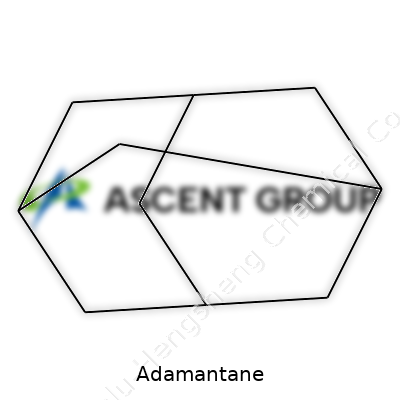
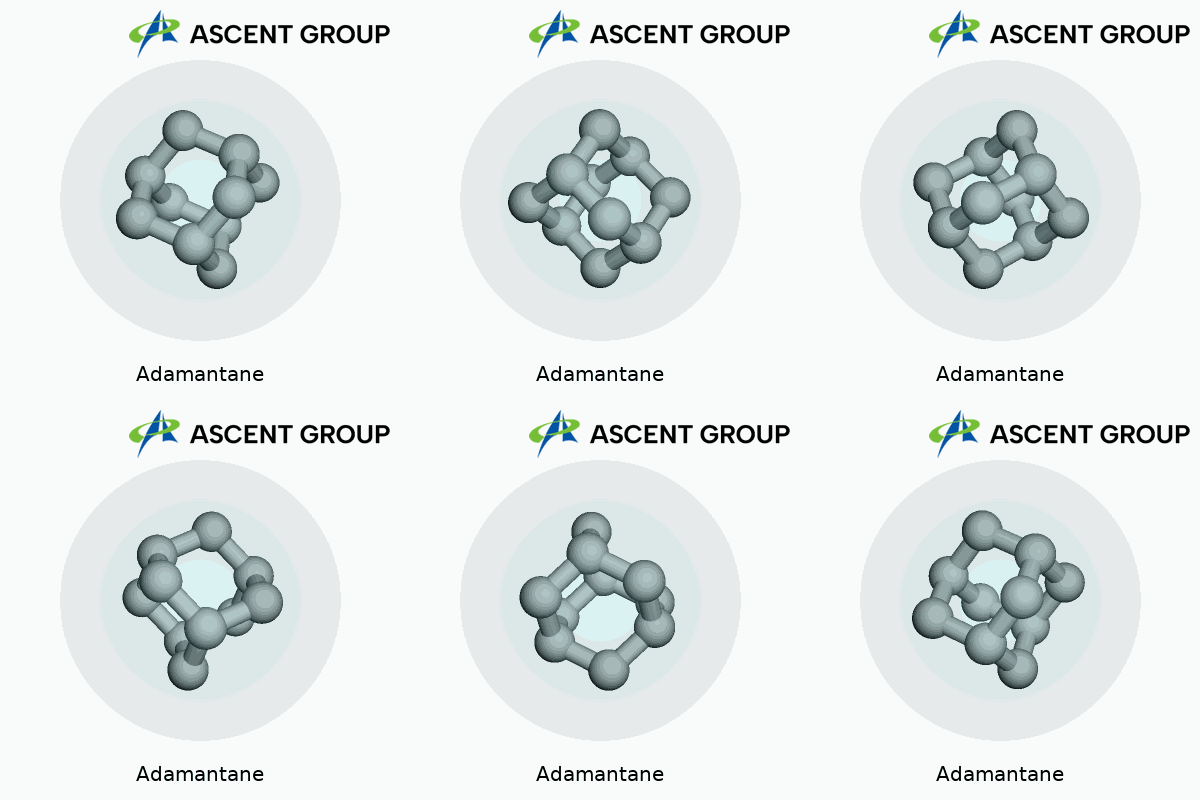
Adamantane stands as a solid hydrocarbon with a C10H16 formula. It takes its name from the Greek "adamant," referencing its structural similarity to diamond’s lattice. The molecule’s unmatched rigidity and three-dimensional arrangement set it apart from more common hydrocarbons like cyclohexane or benzene. While to the untrained eye, it looks like a white crystalline powder, adamantane means high melting point, volatility, and resistance to a lot of chemical attacks in our day-to-day handling. Consistency in producing this material matters; purity issues can trip up downstream applications, especially in pharma and electronics, so we focus on avoiding contamination or structural isomers during both synthesis and finishing.
Adamantane forms white, odorless crystals that manage a melting point just below 270°C, so it shrugs off most ambient conditions and minor heat fluctuations in storage. It dissolves sparingly in water, but works with many organic solvents, including ethers and hydrocarbons, which aids subsequent modifications. Adamantane ranks as one of the most stable carbocyclic frameworks. This stability, as we see on the production floor, means low reactivity under ambient conditions but a predictable response when approached by halogenation or oxidation methods. At room temperature, it won’t volatilize quickly, reducing losses during transfer or packaging. Its vapor pressure remains low, cutting down on inhalation hazards relative to lower-molecular-weight, volatile compounds. We’ve also found that its dense packing can challenge dissolution in some formulations—this is often a bottleneck for those looking to exploit its properties in solution-based applications.
Our technical team focuses on confirming key specs: adamantane content above 99%, moisture below 0.5%, and limiting levels of homologous or isomeric impurities. Analytical techniques such as GC and NMR readouts verify material coming off the line. Labeling requirements center on proper hazard communication. With adamantane’s low acute toxicity and modest vapor pressure, primary risks arise in dust generation—explosion limits for fine particulates need close attention on our shop floor. Accurate labeling, including GHS hazard statements, batch number, and synthesis method, helps both regulatory compliance and internal traceability, especially because some pharmaceutical partners want the detail for every delivered drum.
The road to adamantane production comes from a sequence of robust, thoroughly rehearsed reactions. Early pioneers used extraction from petroleum, but yields fell far short of industrial need. Today, we use catalytic hydrogenation of dicyclopentadiene or tricyclodecane, often under high pressure and over specialized metal catalysts. Reaction control stays tight: overheating risks side product formation and catalyst fouling, while under-hydrogenation means incomplete conversion. Byproducts, like other polycyclic hydrocarbons, require separation—typically done using fractional crystallization or distillation. Fine-tuning parameters, not just temperature and pressure but catalyst composition and cycle time, make a difference in maximizing throughput without sacrificing chemical integrity. Regular cleaning and analysis of the catalyst bed keep our process running yield-efficient for months at a stretch.
Adamantane has a track record as a chemical building block for more complex molecules. While very stable, it reacts in a controlled fashion with halogens—bromination, chlorination, or nitration each introduce functionality for downstream synthesis. Our chemists frequently use Friedel-Crafts alkylation to append groups onto the framework, opening avenues in pharmaceuticals by attaching amine or hydroxyl groups. Adamantane derivatives, including amantadine and rimantadine, have made big waves in antiviral drug development. On our lines, methylation and oxidation (especially to give 1-adamantanol or 1-bromoadamantane) account for the largest derivative volumes. Each route brings scale-up headaches: some reagents, like strong acids for ring-opening, push the limits on materials compatibility and worker safety. Ultimately, the structure invites functionalization but demands careful reaction engineering, lest unwanted rearrangements or waste outpace useful product formation.
Adamantane sometimes appears on orders as decahydro-4a,8a-dimethylnaphthalene or tricyclo[3.3.1.13,7]decane, following systematic IUPAC naming. In practice, “adamantane” or “tetrahydro-1,3,5,7-cyclotetracene” come up most often. Drug intermediates, such as amantadine, stem from adamantane by functional group modification; regulatory paperwork may list these synonyms for specific grades and applications, especially in pharma. We also see trade names registered in various regions, but for pure chemical supply, adamantane and its derivatives dominate invoices worldwide.
From an operational standpoint, adamantane gives us little acute trouble. Its low toxicity combines with lack of significant volatility to make it a comparatively easy chemical on the line. Airborne dust remains the primary risk—dust explosions and respiratory exposure can become issues, so we enforce dust extraction, local exhaust, and mask use. Handling molten adamantane during purification calls for heat-resistant gloves. Internal SOPs focus on preventing ignition sources during packaging, grounding all equipment, inspecting for static buildup, and regular training. Spills get swept up and incinerated rather than washed down the drain; environmental release controls are part of the drill. PPE standards follow the typical route, but special attention is reserved for fire risks and chronic exposure, since very fine adamantane dust can irritate airways in high enough concentrations.
On the application side, pharmaceutical synthesis leads the way. Adamantane’s rigid structure enables precise attachment points for functional groups, which in turn shape how molecules interact with biological systems. Amantadine and rimantadine, two derivatives, have been mainstays in antiviral treatments, particularly against influenza A. In materials science, adamantane derivatives have drawn interest for making heat-resistant polymers and lubricants, due to their cage-like backbone. We have also shipped product for advanced fuel research, and the molecule has seen use as a molecular probe in spectroscopic analysis. Lab supply houses and research institutions order small quantities for testing in molecular electronics—adamantane’s stability and symmetry allow it to act as an insulator or spacer within larger carbon frameworks. Some cosmetic and fragrance chemists also dabble with it for fixatives and stabilizers, but by far, the pharmaceutical and research worlds have created the most sustained demand.
Development in our own labs has shifted from chasing ever-purer batch yields to engineering new functionalized derivatives. By controlling substitution patterns on the adamantane cage, we open doors to antiviral drugs, neurology targets, and platform chemicals. Scale-up tests have focused on shortening synthesis steps and finding cleaner reactions. Halogenated variants, for example, have shown promise as intermediates for next-generation antiepileptics. Research partners bring us novel requests: structures with functional handles positioned for stereochemical control, or polymerizable adamantane units for high-density data storage. We rely on close feedback loops—between pilot-scale chemists and production line operators—to quickly spot bottlenecks or undesirable shelf-life issues. Advances in process chemistry—like continuous-flow reactors over batch—are making an impression by driving down solvent use and batch-to-batch variability.
Toxicology work, both historical and from more recent collaborations, supports adamantane’s relatively low acute toxicity. Inhalation exposure, at realistic workplace concentrations, shows only mild irritation. Oral ingestion studies in animal models found high LD50 values, indicating low risk unless exposures skyrocket beyond industrial norms. Chronic exposure work hasn’t flagged carcinogenicity, but prolonged inhalation of dust or repeated dermal contact can irritate, so controls stay in place. Adamantane’s metabolites and potential bioaccumulation still get attention when we develop new derivatives—medical requirements demand sub-ppm impurity levels, and each new functional group brings fresh regulatory scrutiny. Environmental fate studies show adamantane resists rapid degradation, raising waste management concerns, especially in settings lacking advanced incineration options.
Adamantane’s prospects connect with ongoing progress in pharmaceuticals, materials science, and nanotechnology. The cage structure’s unique geometry doesn’t just confer chemical stability; it underpins molecular design for targeted drugs, new electronic devices, and specialty polymers. Our R&D currently sees the strongest pull from molecular electronics and drug delivery systems, since adamantane can anchor functional units with precise spacing and rigidity. Sustainability pressures are feeding process innovation—look for greener catalysts or solventless conditions to lower waste and energy use. Our labs are tackling microwave- and photochemically-driven syntheses that promise to cut step counts and byproduct loads. As computing models get more sophisticated, virtual screening of adamantane derivatives is speeding up drug candidate selection, redirecting the focus away from laborious trial-and-error. Looking ahead, the intersection of synthetic creativity and manufacturing discipline keeps adamantane a continuing focus for chemists, engineers, and regulatory specialists alike.
Adamantane stands out in the world of chemicals, not just for its striking cage structure, but for the roles it anchors in real-world applications. On our production floor, we watch its transformation every day—from a flexible raw material into the backbone of specialty compounds used in pharmaceuticals, electronics, and advanced coatings.
Pharmaceutical teams look to adamantane for its rigid, three-dimensional carbon framework—a unique platform for building drug molecules with increased metabolic stability. Decades ago, scientists derived amantadine and rimantadine from adamantane as antiviral drugs that helped fight influenza viruses. New molecules built on this structure keep showing promise for neurological disorders, from Parkinson’s disease to multiple sclerosis-related fatigue. Its geometry reduces the chance of unwanted side reactions, making for more predictable results inside the body. Several published studies trace reduced resistance rates in certain applications back to the “shielding” effect of adamantane’s carbon core.
Semiconductor fabrication pulls a significant portion of our adamantane output. It behaves as an excellent insulator, thanks to its thermal stability and low dielectric constant. Research teams opt for adamantane derivatives when precision matters: in dielectric films for microchips, where even minor performance changes can spark large-scale failures. People rarely see it, but the microelectronics sector depends on materials science at the molecular level, and adamantane is a reliable building block. By tweaking its structure, chemists open up new possibilities for organic LEDs and liquid crystal displays. Here, quality and purity directly correlate with fewer malfunctions and improved device lifespans.
Industries ask for adamantane-based compounds when they face conditions that break down ordinary coatings. Infrastructure—such as bridges and power stations—benefits from adamantane’s resilience against weathering and corrosion. Paint and adhesive manufacturers blend into their recipes, aiming for tougher finishes and longer maintenance intervals. Repeated tests show adamantane derivatives produce harder, more scratch-resistant surfaces compared to traditional organic molecules.
Every worker in our plant knows adamantane’s synthesis demands careful attention. Byproducts can sneak in if reaction conditions drift, so labs track every batch for purity. Production hinges on precise control of temperature and catalysis steps. We train crews to spot signs of decomposition, since handling errors waste resources and raise safety worries. Supporting the needs of downstream industries isn’t just about quantity—it’s about consistency and transparency in reporting lot histories.
Chemistry research circles continue to examine ways to synthesize adamantane with less waste and lower energy. Traditional methods usually need high temperatures or metal catalysts. Some labs experiment with milder conditions, or alternative feedstocks that sidestep petroleum. We monitor these paths closely, aware that regulatory pressure and market competition both reward sustainability. Progress here depends on collaboration between producers and academia, cross-checking new methods for both yield and product quality.
Adamantane’s applications reach further than many realize, from medications that help patients regain mobility to displays we use daily. Inside a chemical manufacturing plant, success rests on meeting specs with every shipment, keeping both technologists and end users confident in their outcomes. Each time we refine our process, we push a little further toward more efficient, more sustainable solutions for customers old and new.
As a chemical manufacturer handling adamantane for decades, interest tends to revolve around its robust cage-like structure and thermal stability. Made famous as a backbone in antiviral drugs like amantadine, this hydrocarbon earned attention in laboratories long before consumer questions arose. Compared to many starting materials, adamantane offers chemical resilience and low volatility, which attracts researchers in pharmaceuticals and material science. The safety of this material, especially as curiosity grows around potential dietary or therapeutic uses, brings legitimate concerns to the surface.
Adamantane’s chemical signature in its pure form does not match substances on the “edible” spectrum. Traditionally, it’s been used as a building block rather than a finished ingestible product. Its bitter taste and lack of food compatibility signal caution. Research focuses on specific derivatives, such as amantadine and memantine, which received approval from health authorities for treating influenza or neurological conditions. Safety profiles of these derivatives rely on intensive toxicological testing, strict dosing limits, and clinical supervision. The parent molecule, as produced in chemical synthesis, has not undergone the same scrutiny.
In its unmodified state, adamantane is not recognized as a food additive or supplement by any major food safety authority. Manufacturers like us submit documentation for compliance with health and environmental regulations, but updates from recognized agencies do not list adamantane as fit for unrestricted human ingestion. Its use in humans only appears in regulated pharmaceutical forms, where rigorous data support its safety at specific doses and for certain conditions.
Chemical-grade adamantane may contain synthesis byproducts or traces of solvents, even if high-purity standards are followed. These residues bring an added risk when compared to pharmaceutical formulations, where strict controls address every trace compound. Workers in production facilities follow protective standards, including proper ventilation and protective equipment, to prevent inhalation or accidental ingestion. This should speak volumes about the care needed, and why consumer safety must come before curiosity in untested applications.
The idea of using pure adamantane outside of its intended applications—for example, as a food or health supplement—has not been supported by peer-reviewed studies or regulatory bodies. Each year, we respond to questions about non-traditional uses. Scientific literature only discusses oral tolerance in the context of purposely designed drugs, not the raw molecule. Ingesting any laboratory-grade material brings a real risk of adverse effects, from irritation of the gastrointestinal tract to unknown long-term impacts.
Those considering adamantane for new applications should consult medical professionals and regulatory authorities. Health Canada, the US Food and Drug Administration, and the European Medicines Agency provide clear frameworks. No manufacturer with integrity would encourage consumption of raw adamantane outside of approved pharmaceutical contexts. The safest path always remains a thorough review by regulatory agencies and rigorous clinical trials. This industry gains little from shortcuts and a lot from consumer trust.
As a chemical manufacturer with direct experience, the focus remains on precision, transparency, and long-term safety. Only approved, well-studied forms of adamantane derivatives belong in therapeutic settings—never the pure, industrial form. Respect for this boundary protects public health and upholds the standards trusted by scientists, doctors, and end users worldwide.
Having produced adamantane for decades, I understand how its unique structure and chemistry appeal to both pharmaceutical researchers and specialty material engineers. Adamantane stands out for its rigid, diamond-like cage structure, lending valuable properties in polymer additives and pharmaceutical intermediates. Still, beyond handling considerations within the plant, we constantly address one recurring question: what risks attach to exposure, inhalation, or even mishandling of this compound?
Unlike more volatile or corrosive chemicals, adamantane has a reputation for stability. Workers don’t usually face burns, and it won’t leap out of drums with a whiff of vapor. But experience teaches that skin contact and inhalation deserve respect, especially during transfer, weighing, or mixing in less controlled environments. Inhalation of dust leads to mild irritation of the respiratory tract. Extended handling without gloves has produced some skin dryness or dermatitis among unloading teams. The literature echoes these patterns: dryness, redness, mild itching, but rarely anything approaching severe toxicity.
On the pharmaceutical front, adamantane derivatives, especially amantadine and rimantadine, share a larger base of clinical experience. Thousands of patients have taken these drugs, with reported side effects including nausea, dizziness, insomnia, and dry mouth. Some react more strongly: blurred vision, confusion, or difficulty urinating occurred in elderly patients with other health conditions. We see fewer issues with the base adamantane used in manufacturing, but the stories from end users keep our focus sharp—testing, personal protective measures, and regular reviews of our risk assessments.
Nobody in chemical production wants a health issue to arise from dust wafting out of a silo or inadequately trained staff misunderstanding the hazards. Adamantane might appear innocuous compared to other reagents, but lax handling can give false confidence. In the plant, simple tweaks—enclosed transfer lines, regular review of glove quality, and industrial vacuum systems—cut down dust with far greater effect than any stack of warning signs.
Downstream, it’s not just our team’s safety on the line. Intermediate shipments go to facilities preparing amantadine hydrochloride or specialty lubricants, so quality control labs routinely share back findings if they spot unexpected volatility or trace impurities. That feedback loop reduces downstream medical complaints and tightens our own procedures.
Despite our long-running safety track record, there’s always space to do better. Lightweight, form-fitting gloves minimize dexterity loss and cut down dermatitis. Real-world trials of dust suppression compounds continue, especially with the rise in automated powder-handling systems. Training for new hires emphasizes respect for even the ‘milder’ chemicals like adamantane. Open reporting of minor health incidents forms the backbone for refining those training modules.
Proper labeling, clear communication with clients on potential hazards, and third-party toxicological reviews deliver transparency beyond regulatory demands. Direct experience proves that vigilance, adaptation, and regular communication keep people safe and maintain trust up and down the supply chain.
Anyone who has spent time synthesizing and packaging adamantane knows this hydrocarbon has a personality of its own. Its unique cage-like structure, which chemists have celebrated since the 1930s, lends it impressive thermal stability and low reactivity under ordinary conditions. Yet some of its end uses—pharmaceutical intermediates, specialty chemicals, advanced coatings—demand consistent physical and chemical integrity. This calls for clear-headed storage practices, not just the rote advice often circulated online.
Moisture control always stays at the top of my mind during any transfer operation or long-term storage. Adamantane maintains a robust molecular scaffold, but the presence of water can cause issues during certain downstream syntheses or formulation steps. Humidity creeping into an unsealed drum or bag causes caking. In a few cases, that moisture can spark unwanted side reactions or clumping during blending processes. Dry storage spaces, well-sealed containers, and short exposure windows have proven themselves time and again on our shop floor.
Some might imagine temperature swings don’t matter as much for adamantane as with other chemicals. The melting point sits well above room temperature, so melting or decomposition isn’t an everyday worry. Yet, swings from winter cold snaps to summer heat waves have effects: constant warming and cooling cycles sometimes cause condensation inside storage vessels, particularly in non-climate-controlled warehouses. That’s where we see most of the caking complaints from customers, as lumps make accurate weighing and dissolution harder for everyone downstream. Our operations keep temperatures between 15–30°C to limit those headaches, letting both employees and product handle each season without drama.
Adamantane’s white, crystalline appearance makes even minor contamination highly visible. Dust, fibers, or residual process chemicals stick out immediately. One slip-up during packaging can force reprocessing or scrapping of whole batches—costing hours and plenty of raw material. On site, we dedicate separate lines and exclusive storage areas for adamantane, distinct from those handling more susceptible or dust-generating chemicals. Shortcuts rarely pay off. Any well-run operation will label and segregate adamantane stock away from strong oxidizers, acids, and volatile organic solvents, not out of regulatory habit but from well-earned experience with batch failures and contamination claims.
Too many chemical manufacturers treat storage as an afterthought, focusing on synthesis yields and shipment deadlines. In reality, everything learned on the job points to storage as a cornerstone of product integrity. Open-top bins and loosely capped drums often turn minor moisture absorption or stray debris into costly setbacks down the line, especially for clients requiring tight specifications. Even in bulk, adamantane deserves respect—controlled access, clear inventory rotation, and regular inspection. Every bad bin tells its own story of oversight cut short.
No magic solutions emerge from complicated protocols or expensive equipment. Clear labeling, moisture-proof primary containers, secondary containment for spill prevention, and time-stamped batch logs have delivered reliability at every stage of the supply chain. Our longtime customers can spot the difference between scrupulously stored product and lots that have languished in the wrong environment. The lessons come from the floor, not the textbook: diligent storage directly preserves the value and performance of adamantane, from first drum to final packing.
Adamantane often gets attention because of its central role in both industrial and pharmaceutical chemistry. Our team at the factory spends long hours perfecting the production process, keeping every batch consistent and pure. Customers sometimes ask about sales restrictions: does this compound require a prescription?
Adamantane itself—the parent hydrocarbon, not its derivatives—stands as a specialty chemical with multiple commercial applications. It is not classed as a controlled substance in most places, nor does it show up on the international treaties that typically govern drug or precursor sales. In its pure form, it rarely meets the regulatory threshold that applies to medication—unlike derivatives such as amantadine, which fall under drug laws because of their pharmaceutical effects and approved uses.
In our work, adamantane serves as a raw material for research, new molecule development, and specialty coatings. The compound supplies science teams with the rigid building blocks necessary for creating antivirals, lubricants, advanced polymers, and some electronics. Industries rely on its unique cage-like core, but end users in medicine, for example, only receive finished derivatives made in highly controlled facilities—never crude adamantane straight from a drum.
Local rules set by authorities tend to focus on public health. Selling unregulated adamantane to the average person through pharmacies remains rare because it lacks direct use as a medicine. We sell to companies and labs, not households or patients, because most people cannot use this chemical safely without expertise and equipment. In our experience, responsible sourcing involves clear documentation and transparent buyers—no sales to individuals without business or academic credentials. Customs checks ask for paperwork to prove lawful end use, and most shipping partners request safety data and full supply chain details.
News stories about synthetic precursors sometimes confuse the issue. Media often report the prescription status of adamantane-based drugs and leave out the distinction between the base hydrocarbon and pharmaceuticals made from it. The reality shows up in the rules: finished drugs like amantadine are a different legal category. We never sell these finished compounds; our focus stays on industrial chemistry and intermediate supply.
Factories that treat chemicals as everyday commodities hold a unique responsibility. A few countries add extra restrictions or require licenses for export, especially if the destination deals in pharmaceuticals. In those cases we cooperate fully with regulators to avoid any risk of misuse. Our lines run only when the paperwork is complete, and our managers track material from raw hydrocarbon to final dispatch. Misuse risks go way down when manufacturers and authorities share information openly about who buys what and why.
Adamantane highlights the difference between chemistry and pharmacy. As manufacturers, our job is to supply the scientific community and industry partners, not the end consumer seeking medicinal relief. Safety, traceability, and clear boundaries keep the line between a specialty chemical and a controlled or prescription-only ingredient sharp and well-guarded.