Diethyl carbonate’s place in the chemical industry has grown from its roots in 19th-century organic synthesis to a core specialty solvent and reagent. Chemists once saw it as a curiosity, largely viewed alongside other esters. Starting in the 1960s and 70s, as industrial needs turned toward cleaner, more efficient solvents, demand for products like diethyl carbonate took off. Manufacturing methods shifted from small-scale, batch-wise preparation using phosgene toward more modern, continuous processes using safer, phosgene-free feedstocks. Over the decades, driven both by regulatory changes and a push for greener chemistry, our sector put effort into refining diethyl carbonate’s purity, yield, and consistency. Today, it stands as a component in several growing fields, especially battery electrolytes, specialty coatings, and organic synthesis.
Working directly in production, I see requests for diethyl carbonate coming from diverse clients, from laboratories looking for top-quality intermediates to major factories pushing new battery technology. The product flows in drums, tanks, or even in specialty container formats, depending on the demands of end users. Purity matters more than ever. Batch records, quality control reports, and technical discussions all center around minimizing water content, color, and by-products that can impact downstream reactions. Regulations today set a high bar for labeling accuracy and traceability in the shipment process. Every day on our lines, teams fine-tune process controls because customers expect repeatable quality, batch after batch.
Diethyl carbonate appears as a clear, colorless liquid with a mild, fruity odor. Compared to other carbonates, it boasts a low viscosity and relatively high boiling point, which helps with shipping and storage. It stands out for its good solubility in many organic solvents, plus moderate solubility in water. It is flammable, so our plant design always respects proper ventilations, flash point, and fire suppression requirements. Whether in the laboratory or pilot-scale settings, temperature control proves vital to prevent unwanted losses to evaporation and to maintain purity—especially important as new energy storage technologies raise the bar for contaminant levels. The chemical’s stability under ambient conditions makes it versatile for various synthesis and formulation jobs, though exposure to strong bases or acids triggers decomposition or transesterification.
In our quality department, technical specification sheets define water content, density, acidity, and ester content. Analysis methods draw from international standards like ASTM and ISO, so customers receive consistent reporting. Most customers specify grades based on purity—often above 99 percent—including trace limits for metals, chlorides, and other non-volatile matter. Labeling covers chemical identifiers, hazard statements, and lot numbers, supporting end-to-end traceability. Hazard symbols alert workers and logistics. Labels also include emergency handling instructions and clear UN number designations, since transportation safety plays a major role in this business. We constantly monitor pipeline and warehouse staff to ensure understanding, since a single mix-up can threaten safety and regulatory compliance.
Manufacture of diethyl carbonate shifted from hazardous phosgene-based synthesis to safer options relying on ethyl alcohol and urea, or via transesterification with alkyl carbonates. Our plant long ago adopted urea alcoholysis routes, mixing urea and ethanol under catalytic conditions. Urea’s lower toxicity compared to phosgene lowers environmental risk, though reaction control and ammonia removal present their own engineering challenges. We operate high-precision reactors, manage distillation under inert atmosphere to strip product, and recover by-products for further use or safe disposal. Each improvement in catalyst life, reaction selectivity, or energy management feeds savings back into pricing and environmental performance. Routine process upgrades and instrumentation review keep us competitive and support customers’ quality demands.
Chemically, diethyl carbonate acts as an alkylating agent, a carbonyl source, and a solvent. In-house teams handle contract synthesis projects that use this molecule to introduce ethoxycarbonyl groups onto organic scaffolds, serving pharmaceutical and agrochemical research. Transesterification with mono- and di-alcohols allow preparative access to a wide slate of carbonate esters, widening the product family. Diethyl carbonate also appears in lithium-ion battery electrolyte R&D, where purity and moisture control matter intensely to avoid compromise of battery cycle life and performance. We often work with universities and R&D consortia on new applications, which tend to stretch the boundaries of established process chemistry.
Customers may refer to diethyl carbonate by several names: DEC, ethyl carbonate, or simply by its CAS number. Regulatory and documentation work often requires cross-referencing product codes, so our logistics and quality teams coordinate with global partners on harmonizing names, codes, and hazard designations. Mindful of international trade differences, we avoid confusion by aligning with GHS conventions and frequently updating internal documentation as regulations evolve.
Operating a diethyl carbonate plant reinforces daily the importance of strong safety culture. The material’s flammability, moderate toxicity, potential for eye and skin irritation require strict containment: closed process equipment, certified PPE for staff, well-rehearsed spill response. Air handling systems remove vapors, and all transfer operations rely on grounding and bonding to manage ignition risks. We train staff on emergency procedures with regular drills. Compliance officers monitor documentation for REACH and OSHA standards, with constant attention to waste management and emissions reduction. At every stage, monitoring for leaks, exposure incidents, or waste process upsets never relents.
With every production run, we see demand signals from major sectors. The strongest recent growth comes from lithium battery manufacturing, where diethyl carbonate’s stability, purity, and compatibility with lithium salts make it a key electrolyte solvent. Smaller but still robust markets persist in pharmaceuticals, where DEC works as both a reagent and a process solvent. Coatings, inks, and cellulose derivatives round out our customer mix. As environmental regulations focus more on reducing VOCs and hazardous air pollutants, industries look to diethyl carbonate for its lower toxicity and better biodegradability profile compared to some older solvents. We receive plenty of technical queries about substitution for other esters, especially with clients eyeing safer workplaces and products.
In-house chemists and process engineers spend significant time exploring process improvements. Research focuses on boosting yield and selectivity, cutting down by-product formation, and developing catalysts that extend plant operating lifetimes. We work closely with tech partners to test new reactor designs, monitor trace impurities, and explore routes to decarbonize heat and power inputs. Academic collaborations often target novel uses, from biodegradable plastics precursors to advanced electronic materials. As the market tightens its standards, even trace-level detection and specification grow in importance. Our R&D aims not only at cost and throughput, but also reducing environmental impact, an expectation from global buyers and regulators alike.
Toxicology studies—both internal and from the open literature—characterize diethyl carbonate as moderately toxic through skin or inhalation exposure, though less dangerous than many organic solvents. Animal data suggest possible liver effects with prolonged exposure or high dose, so we take precautions at every phase, from distillation through testing and loading. Customer safety data sheets reflect evolving global consensus. Ongoing monitoring looks for chronic exposure effects in our own workforce, prompting investment in personal monitoring and better ventilation. The trend toward more data-driven occupational health management means regular collaboration with regulatory authorities and transparent incident reporting.
Every planning cycle, we see battery manufacturing and electronic materials shaping future demand. As transportation electrifies and global energy storage grows, electrolyte solvent demand tracks upward. Pharmaceutical and specialty synthesis continue to ask for high-purity diethyl carbonate, with users seeking not just compliance but confidence in product consistency. Regulatory bodies may push for even safer, lower-impact production over the coming decades, so we revisit raw materials, process integration, and circular waste management strategies regularly. Ambitions for bio-based routes attract both research focus and commercial attention, as decarbonization becomes more than a buzzword. In this shifting landscape, plant operators, chemists, and technical sales all work together, supporting real-world progress at industrial scale while keeping an eye on the urgent need for sustainability, transparency, and safety in everything we manufacture.
We have spent years scaling the production of diethyl carbonate, so we watch both its challenges and its changing reputation up close. Most people in manufacturing circles know it as a solvent or a reagent, but the full story builds out much further than that. There’s a reason more engineers, battery designers, and pharmaceutical chemists call with specific demands.
One major use for diethyl carbonate shows up in the push for cleaner fuels. It blends into gasoline as an oxygenate, helping fuel burn cleaner, reducing carbon monoxide and particulates. Blending isn’t always straightforward; diethyl carbonate must remain stable under different storage and transport conditions, which demands attention at the process level. We have sat in technical meetings where optimizing storage and purity drew as much debate as improving supply chain logistics.
As electric vehicles move from curiosity to mainstream reality, battery chemistries are getting more attention. In that space, diethyl carbonate serves as one of several organic solvents for lithium-ion battery electrolytes. It improves ion transport and reduces viscosity across charge and discharge cycles. Battery pack designers aren’t just looking to boost performance—they want to avoid chemical side reactions that could raise temperatures or degrade critical cell components. Our teams collaborate directly with researchers and manufacturers because the purity, moisture content, and trace contaminants in our batches affect the whole system’s reliability. Sometimes they care more about water content than gross impurity levels, since it can influence battery lifespan.
Several pharmaceuticals and high-value intermediates build off the reactions of diethyl carbonate. Organic chemists use it for carboxylation and alkoxycarbonylation, steps in synthesizing carbamates and polyurethane precursors. It’s tempting to call it just another building block, but many processes run smoother when the starting material avoids certain trace byproducts. Our reaction tanks pull off a steady stream of both volume and custom grades, often after careful back-and-forth with customers who bring very specific synthesis problems. Changing even a minor impurity can mean the difference between a pure batch and a recall.
Beyond battery and pharma circles, diethyl carbonate still has a role as a versatile solvent. Thin-layer chromatography, specialty coatings, and some resin syntheses turn to it, favoring its relatively low toxicity compared with other carbonates. Factory managers sometimes ask whether we can keep supply consistent without seasonal dips. The answer ties back to how confident we are in every valve, reactor, and distillation column—how we can adjust production so large accounts aren’t left in the lurch. Our operations team has spent years streamlining this, since one missed shipment can force a plant to stop mixing their batch.
With more push for green chemistry, many customers want transparency about every stage of our process: where the ethanol and carbon dioxide inputs come from, whether we recover and recycle waste. We have installed onsite controls for emissions and ramped up recycling efforts, mostly because both regulatory and customer demands have sharpened. The industry isn’t perfect, but small production choices affect the whole chain—from us down to the end-user.
What matters most, whether you’re designing next-gen batteries, blending fuels, or scaling pharma reactions, is trust in materials that fit exact needs. We have seen the headaches that follow quality lapses or inconsistent batches, and that keeps us focused on both the science and the details, every run.
People often raise concerns about chemical safety, especially when stories hint at hidden dangers in unfamiliar compounds. Recent curiosity around diethyl carbonate is a good place to slow down, take a look at the facts on hand, and bring some perspective from the manufacturing floor.
Diethyl carbonate brings a lot to the table for solvent extraction, electrolyte formulations, and as a fuel additive component. Daily work around it means handling drums, loading reactors, and checking vapor tightness on tanks. Talking safety gets real, not theoretical, when someone actually pours or breathes these liquids. So, the question comes up: is diethyl carbonate hazardous or toxic?
For anyone used to chemicals like methanol, toluene, or acetone, diethyl carbonate definitely does not fall in the most dangerous league. It has a lower acute toxicity than many industrial solvents by oral and inhalation routes. The LD50 in rats by oral ingestion sits well above the levels where you see the ‘skull and crossbones’ red diamond labels from GHS. That doesn’t mean care can slip. Fumes tend to irritate eyes and airways; spills on skin bring redness and discomfort. Anyone who spends time in production or at the bottling line learns not to treat these exposures lightly, even without the highest-grade warning symbols.
One less obvious aspect—diethyl carbonate is very flammable. Most incidents in our plant circles arise not from direct toxicity but from vapor ignitions. Its flash point is low enough that a loose spark in a poorly ventilated warehouse can do far more harm than accidental splashes. Routine static grounding, strict no-smoking rules, and reliable gas monitoring alarms prove their worth all the time. You don’t skirt on those safeguards around diethyl carbonate, and not because of paperwork—the lessons usually came by learning from others’ mistakes.
No chemical floats above risk, and diethyl carbonate is no exception. Handling instructions need clarity, and anyone near drums or lines must have gloves, splash goggles, and jackets on hand. Ventilation keeps vapor concentrations low, especially during filling or transfers. Routine air testing, chemical-resistant floor coatings, and clear walkways form more barriers against both slips and exposure. Training isn’t a box to check—plant workers genuinely watch out for new crew who might get careless at the wrong moment.
On the waste and environmental side: diethyl carbonate breaks down in the environment faster than old-timers like chlorinated solvents. Still, release to drains should not happen. We collect spills and gases using enclosed systems, mostly because regulators watch for solvent emissions, but also because nobody likes running into a sour odor leaking into the surroundings. Investing in better secondary containment saves more than just fines; it prevents safety headaches that everyone would rather avoid.
Sometimes, online chatter turns industrial chemicals into boogeymen or, just as bad, downplays real risks. Diethyl carbonate rarely tops the lists for toxic emergency scenarios, but treating it with respect pays off. In chemical manufacturing, it’s the ordinary risks—flash fires, careless transfer, lax PPE—that harm people the most. With training, honest conversation, and day-in, day-out attention, real hazards can be managed. Chemicals are tools. Active respect, not superstition or blind faith, shapes whether that tool stays helpful or turns harmful.
Many folks in both the chemical industry and academia come across the question: what is the chemical formula of Diethyl Carbonate? There’s quite a bit of confusion in the marketplace sometimes, particularly as people move between common names and the formal structures on a molecular level. In our plant, we’ve produced thousands of metric tons over the years, so we see the formula C5H10O3 on paperwork, shipping documents, and product control charts nearly every day.
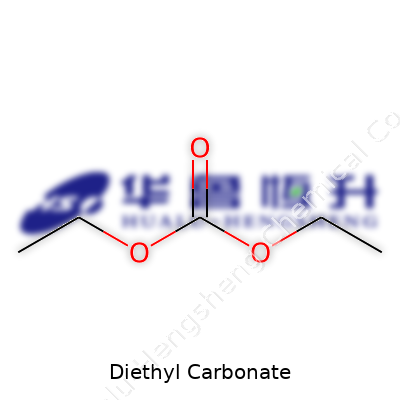
Some people treat the formula as a formality, but for us as manufacturers, it represents practical instructions. Getting the atoms right on paper is the root of why Diethyl Carbonate doesn’t turn into a health hazard during storage, why it reliably dissolves in ethanol and doesn’t decompose in transit. If one atom goes missing or is replaced, properties shift quickly. With C5H10O3, there’s a single carbonyl center linking two ethyl groups through oxygen bridges. Chemically, that’s what gives diethyl carbonate its mild odor, its solvency features, and most useful of all, its low toxicity compared to analogues like dimethyl carbonate or phosgene derivatives.
College textbooks often use a condensed version, calling out the structure as OC(OEt)2 or EtOCOOEt, but at scale, consistency matters and C5H10O3 is what appears on certificates and regulatory filings. That’s what customs inspectors and safety engineers want to see, so everyone in production has to get it right.
Decades ago, we saw mislabeling crop up where traders sometimes referred to diethyl carbonate as ethyl carbonate or ethyl carbonate ester. That led to delays when customers tested samples expecting something else or when regulators flagged the paperwork. In the worst cases, this lack of precision invited questions about purity, batch traceability, and even led to a shipment sitting in a port far longer than planned. Rework drives up costs, wastes resources, and impacts customer trust.
We’ve dealt with customers who thought diethyl carbonate had the same hazards as dimethyl carbonate (C3H6O3), confusing the two based solely on names. Mixing up formulas in technical specs can mean a wrong chemical gets poured into a reaction vessel, which brings risk and cleanup costs. For battery electrolyte blenders, the carbon chain length and oxygen placement in diethyl carbonate are non-negotiable; the wrong compound can tank a research project or shut down an entire blending line.
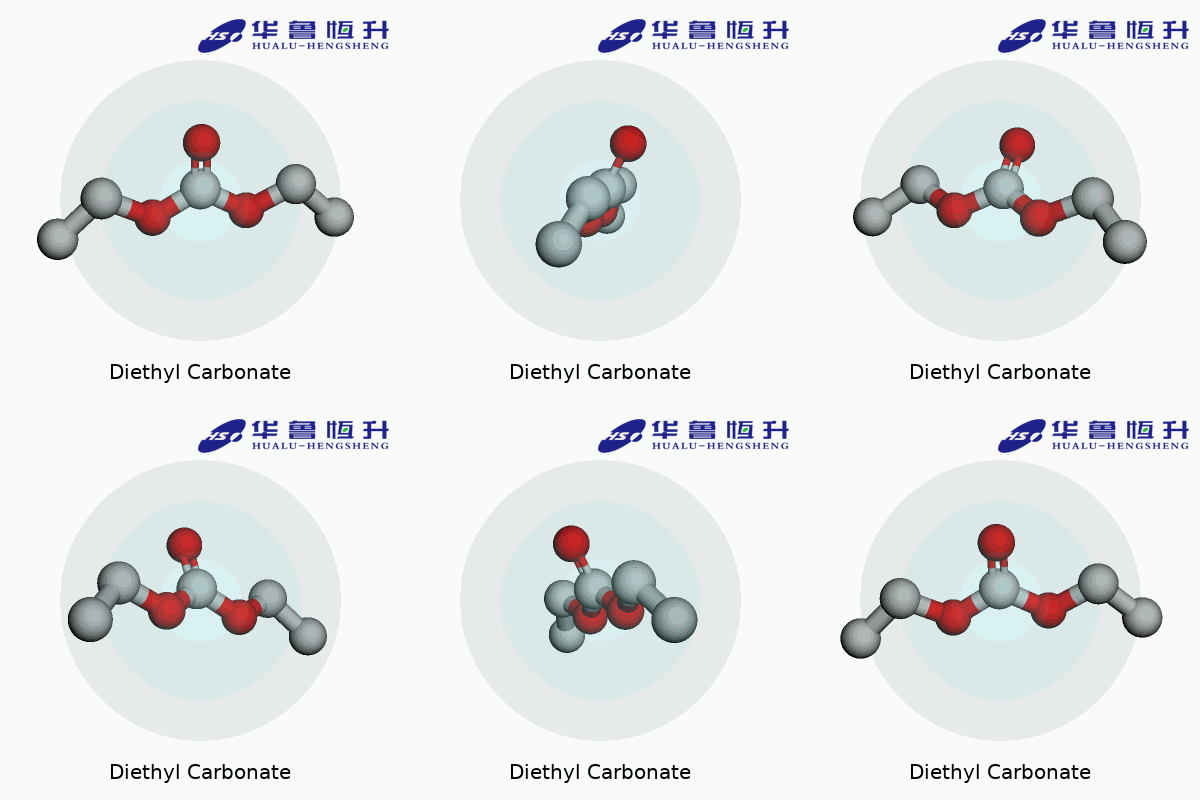
Our plant has shifted over the years to more visual tools. We print formulas on every drum label, give every new hire a chemistry fundamentals refresher, and share actual molecular models during workflow meetings. These simple steps cut back on confusion and keep quality within customer requirements. We also routinely check database entries and supplier lists to weed out alternate names that could muddy the water. If a new customer asks for the “ethyl carbonate ester,” we confirm structure using IUPAC conventions so nobody walks home with the wrong product.
From a manufacturer’s viewpoint, chemistry isn’t theory—it’s about precision, safety, and long-term partnerships. Diethyl carbonate will always have the structure and formula C5H10O3 on our tanks and in our records, not because regulations demand it, but because clarity serves everyone from the folks blending flavors and pharmaceuticals to the engineers working on the next generation of lithium batteries.
Diethyl carbonate generates interest not only because of its chemical versatility, but also due to storage challenges that can catch the unwary by surprise. In our operations, we keep a sharp focus on real-world conditions that affect chemical quality and workplace safety. Carelessness with diethyl carbonate leads to product degradation, safety hazards, and unnecessary downtime. When handling bulk volumes, the correct approach to storage means the difference between costly waste and reliable, on-spec material.
Material compatibility sits at the center of successful storage. We rely on stainless steel tanks or drums lined with suitable coatings, since softer metals corrode and cause contamination. Plastics tend to swell, crack, or allow unwanted permeability. We found that product breakdown often tracks back to improper container selection more than any other single factor.
It’s tempting to squeeze extra use from a tank with questionable seals or suspect gaskets. In our experience, this choice comes back to haunt with batch rejection or, in the worst cases, leaks and environmental headaches. Reliable gaskets, certified valves, and regular tank inspections make a measurable difference in product quality over time.
Diethyl carbonate reacts slowly with water and atmospheric acids, creating breakdown products that show up as acidity or haze. To shield against these problems, we keep storage vessels sealed and fitted with nitrogen blanketing systems. This not only reduces the presence of oxygen and moisture but limits flammable vapor buildup. We've witnessed facilities skip proper blanketing and deal with off-spec raw material, so daily attention to this detail pays for itself in avoided loss and safety.
We never store drums outdoors where rain, fluctuating temperatures, and condensation accelerate material degradation. Instead, all barrels sit in dry, well-ventilated storage rooms with climate control where possible. Every accidental exposure to moisture – whether from open drums or leaky roofs – produces a chain reaction that undercuts reliability and shelf life.
Excess heat raises vapor pressure, causing drums to bulge or relief valves to vent, and even slight overheating speeds up aging and lowers purity. In our experience, even moderate temperature spikes cause headaches during warm weather or when equipment exhaust vents nearby. We monitor our storage areas year-round, relying on thermal insulation for outdoor tanks and positioning indoor drums away from heat sources or sunlight. Most degradation results from overlooked “hot spots” rather than uniform failures.
We treat diethyl carbonate as a living inventory, not a set-and-forget commodity. Every storage facility runs on first-in, first-out principles so that nobody gets stuck with outdated or decomposed product. Dates of manufacture and receipt are tracked directly on each drum and tank; this level of accountability creates a record that speeds up troubleshooting if problems arise downstream.
Proactive storage avoids regulatory fines, insurance headaches, and negative publicity. From our perspective, those investing in the right equipment and stewardship see returns that go far beyond regulatory compliance. We train staff on clear procedures, emergency checks, and the importance of maintaining seals and lines. Even small mistakes compound over time, so vigilance remains the watchword for any chemical storage area.
Through years of hands-on work, we find it pays to revisit storage protocols regularly, test for chemical degradation before drawing down tanks, and foster a culture where staff treat every transfer and inspection as critical. Proper care supports both operational continuity and customer trust, never just the bottom line.
In everyday plant operation, a question like ‘Does diethyl carbonate mix well with water?’ means more than just a curiosity. It’s about tank cleaning headaches, solvent selection for formulations, and downstream wastewater treatment. Lab books print values, but shop floors tell the full story over years of batch after batch. So let’s cut through textbook lingo and talk about what actually happens once the valves open.
Diethyl carbonate stands out as a classic organic solvent. It brings a low viscosity, mild odor, and pretty impressive solvency for a range of non-polar and some polar molecules. We produce metric tons of it, mainly for battery electrolytes, specialty resins, and some pharmaceutical syntheses. The biggest question chemists bring us, besides purity, is how stubborn the stuff can be in cleanup—sometimes underestimating what little water contact will do.
Here’s where real experience matters. Diethyl carbonate and water don’t combine freely. Pour one into the other, and two clear layers form as if obeying an unspoken rule. Anyone who has worked the blend tanks knows: even after heavy stirring, separation is obvious within minutes. That’s by design—its molecular structure refuses to bond well with water molecules. Chemically, we’re looking at a partition coefficient that confirms what your eyes see: extremely low solubility, usually a few grams per liter at most.
That physical separation has both upsides and drawbacks depending on what you need as a manufacturer. For one, you can reclaim a fair bit of diethyl carbonate from water by simple decantation, reducing product loss or environmental load. So, for waste minimization, this is a plus. On the flip side, any traces left behind in rinses or slops demand separation units, which can add maintenance and cost. And trace contamination matters: water uptake can degrade the shelf-life of products relying on a dry carbonate.
The limited water miscibility means no easy shortcuts: for wet-washing lines or drums, we require solvent rinses before hitting the steam jets. Mixed solvent systems often build off this incompatibility. In battery electrolytes, for example, stray water triggers side-reactions, which risks performance and even safety. That’s why experienced teams insist on controlled environments and precisely dried stock.
But this separation isn’t always a headache. In some syntheses, selective extraction becomes possible—pulling organic intermediates out of water with minimal loss to the aqueous phase. The two-layer system does what’s needed without demanding energy-hungry distillation steps.
Biotechnology firms and custom formulators sometimes ask whether surfactants or co-solvents can help blend diethyl carbonate and water. Technically, they can force partial mixing, but the gains often trade off against extra purification. For most industrial use, it’s still best to lean on process controls and dedicated equipment to handle the phase split, keeping water out where the purity matters.
From our own experience at scale, what stands out is this: Water and diethyl carbonate will always keep a distance. Success comes from respecting that boundary, fine-tuning process steps, and never skipping the step of monitoring moisture—right from the storage tank to the final product.