Dimethyl carbonate didn’t appear out of thin air. There’s a cluster of papers from the late 20th century that trace its transition from rudimentary lab curiosity to large-scale commercial product. In the early days, phosgene had a strong foothold as the main route for carbonate synthesis, but anyone who’s spent a shift around phosgene knows its reputation: potent and dangerous. As environmental standards tightened in the 1980s and onward, we saw a surge of investment in alternative synthetic pathways, with dimethyl carbonate at the center of that push. Modern production, built on non-phosgene technology, came after decades of development and regulatory encouragement to move away from hazardous reagents. Installations in Asia, Europe, and even North America helped mature the process, and the role of large players investing in infrastructure proved crucial to the shift away from legacy chemistries. Our own plant became a part of this timeline by integrating an oxidative carbonylation line, avoiding phosgene and trimming hazardous waste output in a concrete way.
Dimethyl carbonate shows up crystal-clear in our tanks, a colorless liquid with a faint ester odor. Its uses stretch from solvent for coatings, inks, and adhesives to reagent for producing polycarbonates and pharmaceuticals. As a methylating and carbonylating agent, efficiency stands out, particularly under milder reaction conditions than traditional alternatives. Unlike some old-school methyl donors, dimethyl carbonate has a lower environmental footprint, an attribute that matters to both regulatory officers and line operators looking to simplify site management. Long supply contracts with downstream plastics, electronics, and fuels manufacturers highlight its versatility in the modern industrial landscape.
You learn to respect dimethyl carbonate’s profile during storage and transfer. Boiling point hovers near 90°C, and anyone responsible for bulk storage knows that means closed vessels and careful temperature control. With a flashpoint well below 30°C, the liquid classifies as flammable, so every pump, valve, and transfer line requires explosion-proof construction. Miscibility with organic solvents gives process flexibility, and the low viscosity makes for smooth tank turns and fast cleaning cycles. Chemically, dimethyl carbonate resists hydrolysis under neutral conditions but handles strong bases poorly. The moderate vapor pressure means that, on a hot day, venting and recovery systems need to be dialed in, or losses creep up quickly. Those properties demand respect from both chemists and operators.
Labels on dimethyl carbonate have changed over the decades, shaped by regional standards and customer feedback. Bulk shipments from our facility leave with purity above 99.9%, with water content kept below 0.05% due to its sensitivity in polymerization reactions. In the early 2000s, we shifted from metal drums to high-density polyethylene IBCs, lowering contamination risk and storage hassles. Hazard communication doesn’t stop at pictograms or safety phrases; it extends into tank yard briefings and digital batch tracking. We maintain lot-level documentation, referencing ISO standards and REACH registrations, so that downstream customers never second-guess the traceability or fitness of what arrives on their loading dock.
Process development for dimethyl carbonate reflects industry’s steady move toward safer, cleaner chemistry. Our current process, an oxidative carbonylation of methanol using carbon monoxide and oxygen, sidelines phosgene entirely. Implementing copper chloride catalysts, we operate reactors under controlled temperatures and pressures, producing less waste than older batch processes. By investing in continuous flow reactors, we managed to scale up efficiently, prioritizing heat integration and emission abatement. The tail gas gets treated to scavenge methanol traces, and all byproducts are logged and minimized. Early pilot trials highlighted the sensitivity of selectivity to water ingress—since then, plant maintenance includes regular vapor seal checks and stringent pump pack replacement schedules.
In actual plant situations, dimethyl carbonate proves as agile as it appears in journals. It esterifies phenols and alcohols efficiently, giving rise to downstream polymers. In methylation chemistry, it replaces toxic methyl halides, lending itself to greener synthesis with strong yields. Chemists favor its selectivity in carbamoylation reactions, a property that shrinks waste, especially compared to urea derivatives or phosgene. Our R&D team routinely explores modifications through transesterification, working on new di- and polycarbonate targets with specialty partners, and occasionally blending it for fuel oxygenate programs. Each batch run in those pilot lines informs the next scale-up, tightening the loop between lab ingenuity and plant practicality.
Industry veterans sometimes refer to dimethyl carbonate as DMC. Catalogs mention methyl carbonate, even methyl carbonic acid dimethyl ester. In regional trade, code numbers appear, though we place more emphasis on clear CAS labeling. Downstream buyers in pharma know it under these synonyms, but in large-scale procurement, clarity matters most. Internally, we adopted a batch-specific coding system, which clarifies identity for supply chain staff and third-party auditors alike.
While dimethyl carbonate marks a significant improvement over phosgene or methyl chloroformate, treating it with complacency never pays off. It’s flammable and, under sustained exposure, irritates eyes and respiratory systems. In our operations, everyone undergoes routine safety drills focused on spill management and vapor recovery. Personal protective equipment—gloves, splash goggles, flame-resistant coveralls—aren’t just paper requirements, they’re part of our daily language. Fire detection, pressure relief protocols, and inerting systems backstop human vigilance. Years of accident reports across the industry point to lapses at the point of transfer as the main risk node, so remote-activated shutoff valves and redundant monitoring stand at the heart of our upgrades. Every facility audit reinforces that operational discipline underpins both regulatory compliance and long-term workforce health.
Dimethyl carbonate finds purpose wherever precise, efficient chemistry drives product value. In plastics, its role in polycarbonate production stands tall, replacing legacy reagents and raising both environmental and physical performance bars. Coatings formulators appreciate low toxicity and rapid evaporation for automotive and architectural applications. Ink and adhesive manufacturers look for balance between solvency and regulatory compliance; dimethyl carbonate checks both boxes. As fuel blending regulations evolve, interest in DMC as an oxygenate rises, with pilot-scale studies running on-site to gauge tank cleaning, blend behavior, and emissions impact. Pharmaceutical teams seek it for methylating steps, especially when downstream purification relies on clean, easily removable byproducts. Its use as an electrolyte solvent in lithium-ion batteries remains a focal point for tech-sector partnerships, with performance in low-temperature cycling and safety margins pushing it onto development shortlists time and again.
R&D programs at our site don’t chase novelty for its own sake. Current projects aim to push oxidative carbonylation toward higher selectivity and lower catalyst loading, tackling cost and sustainability simultaneously. Teams experiment with immobilized catalysts for easier separation, reviewing real-time analytics against legacy batch data. We’re evaluating molecular modification routes that embed DMC segments in polymers, responding to new customer specifications in electronics and medical devices. Partnering with universities gives us access to up-and-coming reaction media, including ionic liquids and supercritical fluids. Internal benchmarking tracks not just yield and time, but also lifecycle emissions, examining points where solvent recovery or heat exchange can make or break operational margin. These development cycles feed directly into line upgrades, translating pilot learnings into commercial advantage.
Dimethyl carbonate’s toxicological profile stands as a cornerstone for broader adoption. Legacy studies and modern OECD protocols converge on low acute toxicity, especially contrasted with older reagents of similar utility. Our ongoing work feeds into multi-site occupational monitoring, with real-world exposure data accumulated over years. Chronic impact studies cover inhalation and dermal contact for both humans and aquatic organisms, with results consistently supporting its inclusion in green chemistry programs. Despite that, no material comes risk-free. We continuously review handling practices to account for minor metabolites and breakdown products in both lab-scale and full-scale scenarios. Partnerships with third-party toxicologists ensure any new findings get assessed without delay, feeding updates directly into training and compliance documentation.
Dimethyl carbonate faces growing demand as both policy shifts and market preference move away from legacy solvents and reagents. Supply chains show clear interest in boosting on-site circularity, particularly by integrating CO₂ valorization into precursor sourcing, closing both material and carbon loops. Several projects in battery chemistry and high-strength polymers signal rising reliance on DMC for both performance and compliance. Continued process innovation promises tighter selectivity, less hazardous waste, and lower energy input. As regulations around VOCs, hazardous air pollutants, and workplace health keep tightening, facilities that invested early in DMC infrastructure see both regulatory headroom and cost predictability. We track these trends closely, investing in production upgrades and forming R&D consortia, aiming for synthesis routes and downstream applications that didn’t even exist during our first commissioning.
We’ve seen more customers show interest in dimethyl carbonate (DMC) in recent years, especially as companies seek eco-friendlier chemical options for manufacturing and industrial production. Handling the stuff daily, pouring it out of drums, measuring, and blending it into bigger recipes, you've got to appreciate its versatility and relatively low toxicity compared to the older solvents and reactants. As a producer, we keep a close watch on shifts in demand because DMC plays in some fast-moving sectors—and every so often, a new application trend emerges.
Our factory floor can often smell faintly of DMC—sharp but less harsh than other industrial solvents. Formulators count on DMC to dissolve polymers, resins, and dyes because it evaporates cleanly and leaves behind stable films, especially in waterborne paints. We’ve supported a handful of manufacturers switching from conventional solvents to DMC in order to cut down on hazardous air pollutants. This move brings a safety benefit for the folks working around the fumes, and for the neighborhoods near coating plants.
One of DMC’s most significant breakthroughs has come as a reactant for polycarbonate plastics. Decades ago, phosgene led the way, but growing regulations and worker safety concerns have forced manufacturers to seek alternatives. DMC stepped up as a much cleaner intermediate. Instead of using highly toxic feedstocks, you can react DMC with bisphenol A under base catalysis and produce bisphenol carbonate. That pathway means fewer hazardous byproducts and an easier job for downstream purification—both matter to our technicians and the environment just outside our gates. We monitor every batch closely since quality swings impact how customers run their lines.
From walkie-talkies to battery mega-factories, DMC has become a battery-world staple. Electrolyte blends rely on its high dielectric constant and low viscosity. We’ve watched demand spike as electric vehicles and consumer electronics have grown. Every production run destined for battery manufacturers gets tested for trace moisture, since just a few extra parts per million make a difference in battery stability and performance. If you ever talk shop with battery engineers, you’ll hear about electrolyte purity—DMC needs to be right the first time.
Lab chemists value DMC as a methylating and carbonylating agent. Over the years, we’ve sold barrels to both large-scale pharmaceuticals and specialty fine chemical plants. It swaps out traditional methylating agents that carry more risks for both operators and the environment. Once you see DMC working in methylation or transesterification reactions, you quickly get why major companies choose it to enhance efficiency and reduce the regulatory load. As suppliers, we keep paperwork ready for every drum heading out—regulators expect traceability, and any slip-ups trigger a chain reaction of questions.
As a manufacturer, we weigh DMC’s benefits and listen to real feedback from customers. Price swings, raw material sourcing, and regulatory shifts shape our capacity planning. Plants want safer, lower-impact chemicals that work just as well as the legacy materials. DMC delivers across coatings, plastics, batteries, and synthesis—each application brings its own quirks, and direct experience has shown our team where it excels and what processes need tight control. Dimethyl carbonate has earned its spot in the toolkit, and we’re not seeing interest slow down anytime soon.
We spend every day in the thick of chemical manufacturing, digging into raw materials, process efficiency, and industry demands. Questions about the environmental profile of a solvent like dimethyl carbonate (DMC) come up often from engineers, environmental teams, and R&D folks across everything from coatings to pharma. There’s been a steady rise in talk of DMC as a “green” solvent, and in our plant, we’ve got enough hands-on interaction to comment on how true that statement really stands.
One of the key reasons so many groups point to DMC as an environmentally friendly option traces to its manufacturing route. Traditional carbonates have a reputation for hazardous precursors or toxic byproducts. Phosgene and methyl chloroformate both create safety risks and extra waste disposal headaches. Our DMC runs use methanol and carbon monoxide, paired with an intelligent catalyst system, to skip over these legacy hazards. Water stands out as the only real byproduct. That’s a big deal when it comes to both plant safety and downstream impact.
We’ve watched several industrial sectors push to replace traditional solvents with greener drop-ins. Acetone, toluene, chloroform, and methyl ethyl ketone show up less in projects every quarter, thanks in part to DMC’s lower toxicity and higher biodegradability. DMC evaporates rapidly, which helps minimize residue in coatings and adhesives. The scent is much milder compared to the harsh offensive odor that marks chlorinated solvents.
Our partners in the polycarbonate and lithium battery industries move serious tonnage. They appreciate DMC’s low Volatile Organic Compound (VOC) rating, making air permitting and odor control simpler. The chemical’s high solvency power, combined with biodegradable breakdown products, keeps downstream treatment systems from overloading.
Safety standards have grown more strict, both at regulatory and corporate levels. DMC’s just not as flammable as more familiar solvents. It doesn’t build explosive peroxides, and its moderate toxicity profile lowers the PPE barrier for staff compared to potent alternatives. Our storage, drum-filling, and piping systems benefit from the compound’s relatively stable nature and ease of cleanup.
Green chemistry isn’t about miracle fixes. DMC brings perks, but it’s not a perfect solution. The feedstocks involved—methanol and carbon monoxide—still raise flags if they aren’t sourced and handled responsibly. In regions with weak industrial safety performance, this remains a sticking point. Scale-up to support wide adoption only makes it more important for producers to keep their process emissions close to zero.
Another friction point involves performance limits. DMC’s solubility and evaporation rate don’t fit every application. Some downstream processes in polymer production require further optimization. Agricultural and coatings users sometimes find the need for blend adjustments, especially at colder temperatures or in high-humidity zones.
We judge “green” not on slogans but on day-to-day realities. Using DMC over legacy solvents has moved us and several of our downstream partners closer to a lower-impact operation. Full life cycle assessments tell the most accurate story: DMC drops greenhouse gas output and improves safety records when producers invest in best practice controls.
Improvement doesn’t stand still—ongoing work in catalyst efficiency, carbon capture, and closed-loop recovery will keep shaping the true impact of DMC, both in our plant and across the industries we supply.
Dimethyl carbonate, or DMC, runs through our production lines daily. In our plant, we see the real issues that can arise with this substance. Anyone proposing to handle large volumes of DMC must take its flammable nature seriously. Vapors from this solvent can catch a spark and lead to fires if basic protocols get ignored. We keep ignition sources far from DMC transfer or storage areas — and have found that even a stray mobile phone can present a risk if it’s not intrinsically safe.
Personal protective equipment amounts to more than a box to tick. DMC vapors can cause skin and eye irritation. Chemical splash goggles and proper gloves have stopped more than a few injuries in our own workforce. To move drums, we rely on full-length aprons and proper face shields, especially during pumping or sampling. Our safety committee routinely checks PPE stock and the integrity of gloves since deteriorated items offer a false sense of security.
Run-of-the-mill fume hoods cannot cope with the volumes released in large processing areas. We installed specialized ventilated cabinets for storage and opted for high-volume extraction systems in key transfer rooms. In smaller labs on-site, we noticed the difference as soon as we added simple local exhaust points at the source of DMC use. Without them, concentrations build up too quickly and occupational exposure limits can get breached.
Early days in our facility taught us a hard lesson: storing DMC near acids or bases can result in uncontrolled reactions. We keep it in stainless steel or high-density polyethylene containers, spaced well away from incompatible chemicals. Secondary containment trays have prevented spills from spreading across our floors. We always check drum integrity during monthly inspections – a single leaking gasket can lead to vapor accumulation, and we never ignore that telltale odor. For larger tanks, we installed level sensors and gas detectors, which paid off multi-fold in catching leaks early.
Our training drills involve local fire departments and all shift personnel. DMC fires cannot be tackled with water – we use foam and carbon dioxide extinguishers instead. We learned to keep clear evacuation routes and mark chemical hazard placards clearly; confusion during a spill or fire costs precious time. Our emergency showers and eyewash stations operate within seconds, and regular maintenance ensures no surprise malfunctions mid-incident.
Maintaining compliance isn’t just about documentation. Every operator on our site carries out annual training covering DMC hazards, safe transfer techniques, and first-responder actions. New hires shadow experienced staff until they demonstrate correct protocol. Updates in guidance from OSHA or similar regulators mean new posters, fresh toolbox talks, and adjusted workflows. In our experience, muscle memory saves lives when accidents happen.
Cutting corners has never ended well in our industry. Whether it’s an overfilled drum venting vapor or shortcuts taken to avoid wearing full PPE during the summer, we’ve seen minor incidents turn into injuries. By investing in staff education, tough container inspection schedules, and close partnerships with emergency responders, we raise the bar for everyone in the chain of DMC handling. Tight procedures, modern engineering controls, and a safety culture built from the ground up make all the difference between routine production and catastrophic loss.
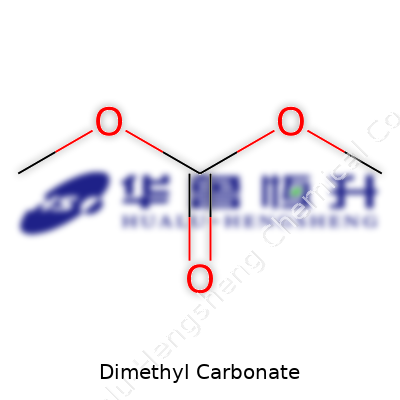
Dimethyl carbonate, often called DMC, holds the chemical formula C3H6O3. This compound appears as a colorless, transparent liquid, offering a pleasant, mild odor that resembles that of esters. In the chemical manufacturing world, DMC catches attention because it presents a practical alternative to phosgene and dimethyl sulfate for methylation and carbonylation steps. The substance weighs in at a molecular mass of 90.08 g/mol, making it easy to handle without the baggage of excessive heaviness or high vapor pressure.
From the production side of things, DMC boasts a boiling point of roughly 90 degrees Celsius. It evaporates more quickly at room temperature than water, so facilities dealing with open systems must pay attention to proper ventilation. At the same time, DMC does not leave behind the kind of residue that gums up pumps or tanks. Its freezing point sits close to 2-4 degrees Celsius, so winter storage in unheated warehouses does present real challenges—solidification leads to handling headaches and extended downtime for transfer lines.
One reason chemical plants rely heavily on DMC lies in its low toxicity. Compared to methylating agents such as dimethyl sulfate, DMC offers a far safer alternative. Fewer acute health hazards translate directly to lower insurance costs and fewer incidents, and that’s reflected on our own shop floor. The flammability of DMC, though, brings its own set of operational risks. Its flash point, sitting near 17 degrees Celsius, means it ignites well below typical ambient plant temperatures. We keep DMC stocks in tightly sealed drums or IBCs and pay close attention to grounding lines and anti-static precautions—sparks won’t get a chance to ruin someone’s shift.
Handling DMC for years, we see its good solubility in water and most common organic solvents offer flexibility for blending, cleaning, or intermediate production. DMC dissolves many resins and polymers, so coatings, adhesives, and specialty polymers industries prefer it over chlorinated alternatives. Waste and cleaning cycles involving DMC produce fewer compliance headaches under environmental regulations—another practicality that’s hard to ignore.
Large-scale production means dealing with logistics. DMC’s moderate volatility and low corrosivity allow us to use standard stainless-steel tanks and pipelines. There’s no need for glass lining or expensive non-metallic materials, as required for highly acidic or caustic media. Most of our operational issues with DMC tend to involve temperature control, rapid vaporization, and safe transfer at the loading dock. It travels well, both by road tanker or in drums, so distribution doesn’t call for elaborate procedures beyond the usual protocols for flammable liquids.
The conversation around DMC isn’t just technical. Many clients appreciate that our DMC doesn’t carry the environmental baggage of many other carbonate sources. We have used greener production methods, including methanol and carbon monoxide with a catalyst. This approach gives off fewer byproducts and fits into a cleaner, circular supply chain. From manufacturing experience, measuring success means looking beyond traditional metrics and seeing how readily workers, customers, and regulators accept DMC as a safe, sustainable material for modern industry.
Direct hands-on experience has taught us the importance of correct storage, real-world hazards of rapid evaporation, and the practical advantages of DMC’s relatively low toxicity and residue-free characteristics. Dimethyl carbonate stands out here not just for its formula and numbers, but for the meaningful difference it makes across the entire chemical production process.
Working with dimethyl carbonate, we’ve seen how thoughtful packaging choices pay off over time. This chemical offers great flexibility in industrial applications, but its volatility and reactivity also demand respect. We fill every drum, IBC, and tank with careful attention to tight seals and pressure compatibility, making sure vapor losses don’t surprise anyone. We also avoid any possibility of water or acid contact during sizing and filling, so our customers can open containers with confidence that the content remains pure and safe for downstream use.
In our facilities, the storage rooms stay cool, shaded, and well ventilated year round. We maintain specific temperature boundaries to reduce pressure build-up inside containers; this keeps things predictable and safe. The storage zone always stays away from open flames and powerful oxidizers. Because we’ve observed rapid pressure increase from just a few degrees of extra heat, we never allow drums to sit outdoors under direct sun, even during short-term staging. Separate spaces, antistatic floors, and access controls help us keep incompatible chemicals and unapproved visitors far away from inventory. Every month, our teams inspect all tanks and containers for swelling, corrosion, or damaged seals, a practice learned after detecting minor leaks years ago that could have turned costly if left unchecked.
From our shipping gates to the customer’s doorstep, every kilometer introduces new risks. Long-haul drives magnify the importance of correct labeling and certified packaging. We don’t cut corners on securing drums with certified tie-down systems, and only partner with haulers who prove they understand the risks. Even seemingly small choices—like scheduling deliveries outside of peak heat hours—can prevent headaches. Throughout transit, proper ventilation in cargo areas counters any buildup of flammable vapor. Our team educates carriers on emergency procedures using firsthand scenarios drawn from our experience, reinforcing clear communication at every step.
No automated system beats thorough staff training. Each person handling dimethyl carbonate undergoes hands-on education and regular refreshers. Our warehouse workers learn how to load and unload without jolting or puncturing containers. Drivers practice scenarios like roadside emergencies or rerouting during extreme weather. Sharing real incident reports from the field makes every safety procedure stick. These skills protect our people and ensure our customers receive the material with its integrity intact.
We pay close attention to near-misses and minor issues, seeing them as chances to get better before bigger problems appear. After one past incident involving an unsecured valve, we changed our checklists and doubled up on valve inspections before each dispatch. Our openness about past mistakes, both within our team and with customers, deepens trust and drives improvement. Lately we’ve also explored using electronic tracking tags to monitor temperature, location, and container pressure throughout transit. These investments let us react before a small issue balloons into an emergency.
Our long-term commitment to safe storage and transport of dimethyl carbonate comes from firsthand experience, not theory. We’ve learned that rigid processes and real-time vigilance keep our teams, our communities, and our customers’ businesses safe. In a field that deals with potentially reactive chemicals, the little things add up—plain labels, clean drums, cooler warehouses, honest debriefs—each one shaping a safer supply chain from door to door.