Ethylene glycol has an origin story that mirrors twentieth-century advances in chemical manufacturing. In the early days, producers derived it from the hydration of ethylene oxide, which itself comes from ethylene. This process took real shape during the 1930s, coinciding with greater access to petroleum-based feedstocks. Our facility adopted the direct catalytic hydration method once downstream ethylene oxide plants grew in scale, solidifying the route as the global standard. Changes in manufacturing never come easily—a move from imported carbide routes to ethylene-based processes marks a leap in both economics and plant design. Chemists who trained in those eras recall long hours spent optimizing catalyst longevity and minimizing side products. Old reactor batches would cloud over with diethylene glycol and triethylene glycol before today's process controls allowed tight product selectivity. Our plant historians pull up flow diagrams from each decade, showing that much of what we take for granted—continuous reactors, recycle streams, real-time analytics—grew from an urgent need to deliver cleaner, safer glycol on a demanding world stage.
Every time we discuss ethylene glycol in our operations meetings, we focus on its dual personality. To engine coolants, it is the backbone; to polyester fiber plants, a crucial monomer. No presentation about our main glycol line misses highlighting its clarity, low volatility, and readiness for chemical transformation. Colleagues who work the bulk storage tanks will tell you that each shipment cycles through rigorous sampling—clarity, color, water content, pH, inhibitor residue all need tracking before a drop heads out to customers or enters a polymer kettle. Over the years, as applications have multiplied, so have performance demands. We see technical upgrades in our analytical labs directly reflect movies in man-made fiber production, electronic circuit board assembly, and recent battery coolant markets. The more diverse the industries, the sharper our focus grows on exact molecular purity.
Daily plant life for us means encountering the slipperiness of ethylene glycol—a nearly colorless, slightly viscous liquid that pulls water from the air if not sealed. Its boiling point sits around 197°C, high enough for safe use in engine circuits, and its freezing point depression ability forms the basis for antifreeze blends. Pouring from drums requires care; spills feel as sticky as syrup, making floors treacherous. Our lab teams stress the importance of knowing its full miscibility with water. Fire safety drills point out ethylene glycol's flash point, generally above many gasoline blends, but combustion by-products include toxic smoke. This colorless profile lulls techs into forgetting its inherent hazards, a mistake we counter with ongoing training. Vapor pressure measurements, refractive index readings, and water absorbance checks all play into our daily controls for both customer specs and internal process monitoring.
Pulling product from a reactor never ends at a simple pass/fail grade. Meeting an internal spec sheet means more than hitting minimum purity. Today's market expects near-complete absence of odor, undetectable heavy metals, consistent density, and, for certain users, certified non-biased additive levels. We keep glycol in dedicated, nitrogen-blanketed tanks—trace oxygen content not only risks degradation but also chases away textile and electronics contracts. Sometimes, the smallest traces of iron or sodium can wreck an entire batch for a high-end device manufacturer. Labeling walks a balance between legal compliance and customer trust. Globally recognized hazard pictograms sit beside detailed batch numbers and lot histories. Our regulatory and export compliance staff hold constant consultations to stay aligned with changing United Nations, European REACH, and US DOT rules. Any slip-up costs more than money; it means risking long-standing partnerships built over decades of delivering exactly what we claim on each drum or tote.
In a live plant environment, manufacturing ethylene glycol begins with ethylene oxide produced from petrochemical feedstocks. Our reactors mix ethylene oxide with carefully metered water under moderate pressure and controlled temperatures—no open flames or quick shortcuts allowed here. Exothermic reactions require rapid heat removal, so our engineers constantly monitor process flows and adjust cooling water rates. Operational delays waste ethylene oxide, which comes at a cost both to the bottom line and plant safety. Impurity control means managing side reactions that could form higher glycols, resinous deposits, or other heavy ends. Our operators maintain catalyst beds, scrubbers, and recirculating loops with disciplined regularity. Downtime for preventive maintenance gets baked into our annual plant schedule. Any deviation in feed quality or process conditions shows up quickly in product purity tests, making upstream planning vital. Each liter of condensate turning into high-grade glycol reflects years of process tuning and a pragmatic approach to balancing yield, safety, and cost.
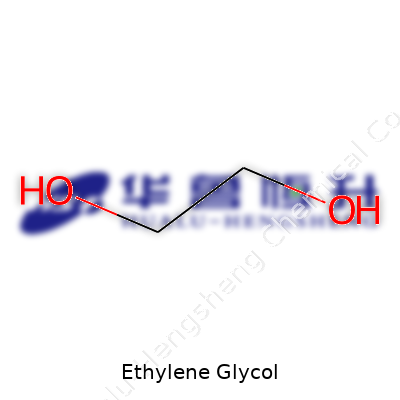
Chemists designing glycol-based products leverage its two alcohol groups for extensive downstream chemistry. Formulation scientists in our R&D group explore reactions ranging from simple esterification to more challenging etherification or polymerization. For polyesters like PET (polyethylene terephthalate), we see glycol reacting with purified terephthalic acid under heat and catalysts to shape bottles and fibers appearing in daily life. Other teams experiment with mono- and di-substituted glycols, adding functional groups that suit hydraulic fluids or brake systems. Environmental goals prompt us to look at new glycols prepared via bio-based ethylene, testing batch by batch for identical reactivity and aging properties. Byproduct management continues to occupy plant engineers. Diethylene glycol, often a parallel or secondary product, wins value in adhesives and solvents, but demands careful tank and pipeline segregation. Researchers rely on in-house pilot reactors that mimic full-scale runs so tweaks in process chemistry get proven, not just theorized.
No matter where our product ships, it carries a vocabulary that echoes decades of industry convergence. New hires quickly learn to recognize terms like monoethylene glycol (MEG), ethanediol, and 1,2-ethanediol, which all point to the same molecule. Certain regulatory environments still refer to the older "glycol alcohol" descriptor, but most of our documents and SDS labels use MEG to avoid confusion with its relatives, diethylene glycol (DEG) and triethylene glycol (TEG). In the specialty chemicals market, the name finds its way into trade brands, but regardless of which stands on the drum, our quality stays consistent. Consistent terminology pays dividends when troubleshooting customer issues or coordinating technical data between manufacturing, supply chain, and R&D teams.
The practical realities of handling ethylene glycol drive our operation's best safety habits. Inhalation risks stay low unless significant misting or high-vapor situations occur, but skin absorption and accidental ingestion demand constant vigilance. Strict access control, double-gloving, and reinforced eyewash stations serve a practical reminder that glycol toxicity remains a present danger. Our safety committee works alongside production to refresh response protocols—a spill or leak means immediate action, and waste streams enter dedicated collection. Each batch follows documented procedures for loading, transfer, and sampling. Frequent audits and drills ensure our emergency response teams stay sharp. Across production, storage, and shipping, regulatory compliance plays out in the daily grind of training updates, PPE reviews, and annual safety stand-downs. Accidents often trace back to complacency, never process design alone. We carry high expectations for personal accountability on the shop floor and trust those habits keep our people and neighbors safe.
Ethylene glycol wears many hats. Production teams marvel at the range of markets, from textile resins to heat transfer fluids. Polyester fiber plants operate around the clock with reliable shipments of high-purity MEG, forming the backbone of everything from clothing to carpet. Each autumn, as temperatures drop, our glycol blends see demand spikes for engine and HVAC coolants. Industrial dehumidification systems depend on its low vapor pressure, while ink manufacturers use it to control flow properties. Electronics makers order high-purity lots for printed circuit board fabrication. Paint and coatings chemists develop new projects using glycol-based surfactants. Even pharmaceutical intermediates sometimes trace their lineage to our main glycol lines. Our customer list pulls from innovators in sustainable packaging, battery thermal management, and specialized lubricants. Whether destined for consumer-grade antifreeze or the cutting edge of materials science, each kilogram that leaves the plant has to deliver on reliability and performance.
Our R&D team runs years-long projects in pursuit of process improvement and product innovation. They constantly refine catalyst performance at every production step, testing new combinations aimed at reducing energy demand or cutting down side product volumes. Process engineers collaborate with lab techs, running pilot plants that replicate full-scale operating conditions—every new parameter hits real-world bottlenecks before graduating to the main reactor. Product development expands far beyond glycol itself. Our staff investigate new additive packages for automotive coolants to enhance corrosion inhibition or freeze suppression. Environmental pressures spark interest in manufacturing glycols with renewable bio-ethylene. Lifelong learning runs through every research group; conferences, peer-reviewed journals, and cross-company benchmarking feed the next batch of experiments. Innovation never sits still—the market pressures every operational team to keep process reliability and product consistency at the highest possible level.
Decades of toxicological research shape our internal protocols. Chronic exposure studies point to kidney and liver impacts, making us vigilant about accidental exposure among staff. Our in-house safety team follows the updates from global health authorities and regulatory agencies. They track occupational exposure limits, blood and urine analysis protocols, and recommend exposure controls. Plant medics run wellness checks, and mandatory training sessions walk every operator through relevant first aid, decontamination, and reporting requirements. Public concerns about accidental ingestion, especially related to pets and children, led our product stewardship group to add bittering agents to certain antifreeze lines. Wastewater controls and air emissions monitoring support our belief in environmental responsibility; we actively invest in process systems that minimize potential discharges. New research in environmental fate and breakdown products drives us to review even routine emissions, reflecting steady improvements in both monitoring and remediation practices.
Industry trends show ethylene glycol at a crossroads. Global expansion of polyester fiber production drives demand, but forces a sharper eye on plant emissions, waste reduction, and greener process design. Our technical experts evaluate routes to bio-based glycols, comparing their product profiles with current petroleum-sourced lines. Automotive transitions toward electric vehicles create new applications—thermal management fluids, battery compartment cooling, and high-performance plastics. Demand for high-reliability electronics and optical devices brings requests for higher-purity glycol, pushing process controls to new levels. Regulatory pressure on greenhouse gas emissions challenges our energy management strategies, with future investments pointing to catalyst improvements, closed-loop water cycles, and alternative feedstocks. Long-time plant supervisors coach the next generation on balancing throughput and depot-level safety. Labs run pilot runs for new additives, enhanced recyclability, and sustainable glycols. Every shift, every meeting circles back to a central goal: keep improving both product and process to serve tomorrow’s needs without overlooking the lessons learned from years of hard-earned experience.
Producing ethylene glycol day in and day out, I know the impact this chemical has far beyond our plant gates. It drives both winter safety and modern manufacturing. We understand the reasons this molecule gets shipped in tankers around the world.
Ethylene glycol flows through automotive radiator systems and industrial chillers. It lowers the freezing point of water so that engines don’t seize up in a January frost, or industrial cooling systems don’t crack during a cold snap. Factories count on those systems to keep motors and electronics running within safe temperatures. Over the years, many garage mechanics and plant engineers have shared stories about blown engine blocks or failed chillers before switching to the right glycol mix.
Modern cars, buses, and trucks run longer when their engines stay protected against freezing and overheating. Without this colorless liquid mixed in coolant, entire fleets face the risk of sudden repair costs every winter. The trucking companies and fleet operators we’ve met are clear: reliable coolant isn’t a luxury for them, but a staple of daily business.
Sitting at the base of our own supply chain, ethylene glycol feeds directly into the production of polyester fibers and resins. Nearly every T-shirt, fleece, plastic bottle, and food container relies on it. Polyester manufacturers order thousands of tons to synthesize polyethylene terephthalate, or PET. That transformation sits at the heart of global textile and packaging industries. Every reel of PET chip made represents another batch of glycol that left our tanks and kept the mills running.
Shifts in consumer preference toward recycled content and more efficient polyester production have challenged chemical producers. It helps to collaborate closely with polymerization customers, taking feedback on purity requirements or process changes. We refine our production lines, so that both mass producers and specialty fiber developers get what their processes demand.
Aircraft de-icing, specialty hydraulic fluids, and solvent applications rely on ethylene glycol. Airports spray it on wings to prevent ice buildup before takeoff in snowy climates. Factories use it to formulate hydraulic fluids that keep industrial equipment operating through the freeze-thaw cycle. Chemical processors use it to make a range of other derivatives. Each of these end uses ties back to consistent quality and traceable supply.
Not all uses come without risk. Overexposure or improper disposal can threaten human health and water supplies. Over time, operators have recognized the importance of worker training and closed-loop handling systems. We prioritize investments in containment and recovery during loading, unloading, and blending. Partnering with customers, we deliver guidance on best practices and work toward recycled and safer alternatives for applications where appropriate.
Demand for ethylene glycol rises as automotive, construction, and packaging needs grow in emerging markets. At the same time, public attention to chemical safety, water stewardship, and sustainable alternatives keeps us alert. As manufacturers, we take pride in building relationships with users worldwide and responding rapidly to changes in regulation and technology. Each shipment carries our name and our reputation — that motivates us to meet evolving expectations for both quality and responsibility.
As a company that synthesizes ethylene glycol in bulk, we see its unmistakable value and its real dangers every day. Ethylene glycol keeps vehicles running by lowering the freezing point in radiator fluids, among its other uses, but without respect for safety, it brings significant risks to people and animals. Every technician, plant worker, and logistics team member working in our facilities learns early on: this compound offers zero room for complacency.
Accidental exposure transforms ethylene glycol from a tool into a hazard. In humans, a small amount can lead to poisoning, damaging organs such as the kidneys, nervous system, and heart. Early symptoms often mimic intoxication, making it easy to miss the warning signs until serious harm occurs. Ingestion remains the most dangerous route, but skin contact and inhalation bring issues too, especially during maintenance or packaging jobs without adequate personal protective equipment.
We manufacture thousands of liters every day, so stories about pets accidentally consuming coolant are more than statistics—they’re cautionary reminders. Cats and dogs seek out the slightly sweet flavor, but their bodies cannot break it down safely. With pets, even a small spill in the wrong spot can cost a life in hours. Rural customers report similar problems with livestock when leaks escape detection along transport lines or storage points. Our on-site teams routinely run drills for spill containment, not out of regulation but out of necessity to prevent these tragedies.
Safe handling begins at the reactor and doesn’t stop until the last tank, valve, or drum reaches its final destination. We keep our floors clean and dry because residue on boots can travel unexpectedly into common areas. Production equipment gets frequent checks for leaks, and sample points carry visible hazard labeling. For customers taking delivery in bulk, we always urge dedicated storage tanks fitted with locking lids and clear signage.
Beyond the plant, incidents sometimes occur during routine transportation or delivery. Tankers carry secondary containment systems; staff responsible for pump transfer operations have passed hands-on spill response training. Our drivers work with route plans to avoid any high-risk zones near schools or residential areas. Prevention remains the only reliable answer—once released, ethylene glycol is extremely difficult to recover from soil or water, posing a danger long after the visible spill is gone.
Some customers ask if safer alternatives exist, and there’s ongoing research into less toxic antifreeze ingredients. Propylene glycol offers lower toxicity but doesn’t always perform as well in terms of freeze protection or cost. As manufacturers, we support efforts to reformulate products where feasible, but effective emergency response and public awareness campaigns continue to serve as the strongest line of defense.
Manufacturing ethylene glycol brings a responsibility that extends well past plant gates. It demands systems that pair technical knowledge with practical caution, constant training, and an honest dialogue with everyone down the supply chain. Risks can come from the smallest oversight, so each step in processing, packaging, and delivery comes under watchful eyes. Protecting human health, animal well-being, and the integrity of our business requires daily vigilance—a lesson we cannot afford to relearn.
Working with ethylene glycol each day sharpens a sense of responsibility—both for people and for what leaves the plant. No one jokingly pours this chemical down the drain, and no one skimps on storage protocols. Ethylene glycol deserves serious respect because, while it delivers reliable freeze protection for coolants and industrial heat transfer, careless handling causes real problems. Leaks reach drains and waterways quickly, with toxic effects on wildlife and, if unchecked, people too.
Small lapses invite outsized headaches. A rusty or poorly sealed tank doesn’t just pose a risk of leaks—it also leads to water getting in. Moisture isn’t a trivial contaminant; ethylene glycol reacts with it. That exchange eats away at product integrity and increases acidity, which can accelerate corrosion in on-site equipment downstream. Spill-contaminated containers create batch inconsistencies, so we keep drum bungs tightly closed and transfer lines flushed and dry. Routine checks of gaskets, pumps, and seals matter because any slip shortens product life and eats away at margins.
We run training refreshers every quarter, because even the most seasoned crew can get too comfortable. No one comes near transfer lines without gloves and goggles. Ethylene glycol absorbs fast through skin, so direct contact isn’t just uncomfortable—it’s dangerous. Teams immediately clean up drips and splashes on the spot. Respiratory risk runs low under normal conditions, but heating or misting up the product changes that. Good ventilation in storage and mixing rooms means no headaches, no irritant odors, and no waiting for the air to clear.
Ethylene glycol won’t catch fire easily, but constant close contact with ignition sources just isn’t worth the risk. We keep tanks away from boilers and sparks. Temperature swings bring complications too. Freezing thickens the product, which chokes pumps, hoses, and metering gear. High heat can set off slow decomposition, upsetting product specs and, if overlooked, causing sudden shifts in pH for downstream users. We keep tanks between moderate temperatures, often using insulation or gentle heating in cold months.
Local and national regulators have reasons to enforce legible, up-to-date labels and spill response plans. Chemical manufacturers don’t get a free pass—every container, tote, and transfer point gets clearly marked and mapped. Spill kits stay close to where the product lives and moves. Our teams drill on swift response, since a slow cleanup can turn into a public problem fast. Environmental reporting, secondary containment for bulk tanks, and employee buy-in aren't just “red tape.” They protect the natural world and our business from legal risk.
Plant managers listen to feedback from both the line workers and lab staff. Small process tweaks often lower risks and boost morale—like adjusting the product loading sequence or improving the lighting near fill stations. We don’t wait for mistakes to teach lessons. As chemists and operators, we watch what works, share what doesn’t, and adapt. That’s how we deliver safer product and a safer workplace, batch after batch.
Every day at the plant, we handle both ethylene glycol and propylene glycol. They look similar on paper, but using or making them quickly teaches the differences run deeper. On the production lines and in our quality labs, nobody confuses one for the other. Customers' questions often center on safety, performance, and final application, and that's where experience comes to the front.
In industry, ethylene glycol and propylene glycol both serve as base fluids in antifreeze, coolants, and de-icing compounds, but their properties set them apart. Ethylene glycol gets picked for its higher thermal efficiency. In large-scale chillers, power stations, and closed-loop heating, this often means better capacity for pulling heat away from critical parts. That translates directly into lower running temperatures, less risk of overheating, and more cost-effective maintenance.
Safety teams care about toxicity. Ethylene glycol, even at production scale, can’t be taken lightly: ingestion at relatively low amounts can have serious health consequences. We use engineering controls—containment, closed systems, vapor exhausts—to protect everyone on site, but handling needs strict discipline. Propylene glycol, on the other hand, carries a much lower toxicity profile. This feature shapes its use in food-processing chillers, cosmetics plants, even pharmaceutical manufacturing. Our batches headed for those markets follow even tighter purification steps. Propylene glycol ends up in toothpaste, hand sanitizer, and some pet foods for a reason.
From manufacturing to shipment, ethylene glycol generally comes cheaper. Our supply contracts for the raw materials often reflect that. The chemical process for ethylene glycol also has a long-refined efficiency. Propylene glycol takes more to convert from feedstock, pushing its cost up. Some customers stick to ethylene glycol due to tight budgets and willingness to run higher safety measures on site. Others, who manufacture goods for human or animal contact, set their sights on propylene glycol from the start, regardless of cost differences.
The logistics team keeps a sharp eye on labeling and segregation, especially for export. Regulations look much stiffer for ethylene glycol. Packaging teams train for extra diligence, checking closures and warning tags, because even a single mix-up can trigger a recall of entire shipment lots.
There’s increasing pressure from regulators to use chemicals with better safety records. In the plant, we document every step, stay up to date with global requirements, and look for greener alternatives where possible. Propylene glycol fits neatly into this trend, especially as end users in food and pharmaceuticals press for transparency. Some companies also request fully bio-based grades, which present their own manufacturing challenges: they cost more, require dedicated production lines, but they meet rising demand for renewable sourcing.
Experience in production points clearly to this: matching the right glycol to the application protects users, reputation, and the business. Plant operators, truck drivers, and lab techs all see the difference each day, not just in specifications, but in the way these chemicals touch lives inside and outside the factory fences.
Over the years making chemicals, we see hazards best from up close. Ethylene glycol’s sweet smell hides a rough side: one mistake, and skin, lungs, brain, and kidneys pay the price. Teams who spend time with it quickly learn that familiarity never justifies carelessness. The symptoms don’t rush in loudly—nausea, vomiting, headache, even blurred vision only later, once damage starts deep inside. In our industry, that means vigilance builds into every routine.
Leaky drums or valves quickly become trouble. Where ethylene glycol gets dispensed, secure storage, exhaust fans, and spill trays come standard. Open drains or contaminated floors transform small mistakes into serious cleanups. The material stains and creeps, so handlers wipe spills the moment they spot them. Signage and floor markings guide technicians, making it clear: don’t walk through anything you can’t name.
Direct skin contact with ethylene glycol leaves behind sticky residue worsened by repeated handling. Gloves—usually heavy-duty nitrile or neoprene—last through whole shifts. In splash zones, goggles with side shields block stray droplets. In tight spaces, full-face shields shield workers from the unexpected. We’ve seen the results of overlooked splashes: rashes, red eyes, doctor’s notes. Face masks or respirators come out whenever fumes might gather above recommended limits.
Many new hires remember only the label warnings. But seasoned operators pass down lessons. They remember coworkers who didn’t wash up and got sick, or incidents from when a shortcut led to a trip to the hospital. Our site runs refresher sessions—actual walk-throughs of transfer and mixing steps—showing how even quick tasks demand respect for the material’s dangers. No one leaves training thinking spills won’t hurt them.
Where ethylene glycol moves through pipes, air monitoring becomes regular practice. On a hot day, vapor drifts higher—alarms and badges immediately call out overexposure. Wastewater presents another avenue: we capture rinsate and event water, diverting these for treatment. Landfills and rivers don’t accept our runoff, so our facility invests in recovery and neutralization equipment tailored for glycol waste, not just to meet codes, but to reassure neighbors downstream.
Spills demand action. Absorbent pads, neutralizing granules, and properly labeled waste bins stand ready nearby, never stashed in some distant storeroom. Teams drill on response procedures—contain first, notify the floor leader, report injuries, check gear. The reality remains that seconds count, and trust comes from practice, not paperwork. Our past mistakes guide our protocols more than any checklist.
Ethylene glycol’s benefits run throughout industry, powering chillers and heat exchangers across the country. Yet, as direct manufacturers, we know it becomes dangerous where people get complacent. The rules—ventilation, gloves, goggles, fast spill response—aren’t just legal boxes. They’ve prevented accidents in our own corridors. We keep sharing these reminders because every safe shift proves their worth.