Long before modern chemistry classrooms picked up the subject, oxalic acid appeared in natural sources such as wood sorrel and certain fungi. Thrown into the annals of organic chemistry, early pioneers extracted it from plant matter, usually after some trial and error. Over time, technical methods matured. By the 19th century, synthetic production edged onto the stage, largely through oxidation of carbohydrates. From there, producers started refining their approaches, optimizing yields and purity. Years have taught us to move past laborious plant extraction, settling on methods that offer consistent quality, lower impurity risk, and scalable output to match demand pressures from textile dyeing, metallurgy, and pharmaceutical synthesis. With every enhancement, the industry’s understanding of both the rewards and risks deepened, always driven by the concrete hands-on challenges faced on the shop floor.
Oxalic acid’s dual appearance—white crystalline solid and, less commonly, colorless solution—remains a simple testament to basic chemistry. Most of the world recognizes this molecule as an agent for cleaning, metal treatment, and chemical synthesis. From a manufacturer’s perspective, the real work comes not just from cranking out tonnage, but from hitting specific benchmarks on purity, controlling particle size, and ensuring shelf-life fits the rigors of industrial supply chains. Oxalic acid tends to attract niche demands, so producers invest in batch consistency to keep customers in electronics, pharmaceuticals, and rare-earth processing confident that what arrives is what they need—every lot, every shipment.
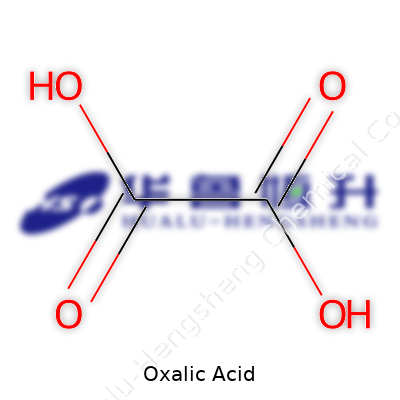
The stuff is a dicarboxylic acid with the formula C2H2O4. At room temperature, it forms colorless monoclinic crystals. Its solubility jumps in hot water and it brings a pronounced acidic bite, outpacing vinegar and even citric acid. Producers see this play out every day when handling drums, as oxalic acid’s reactive touch with skin and metal sets it apart from less aggressive materials. In practice, it can chelate iron and calcium, which delivers both its perks in cleaning and risks in poisoning. Every reactor load, every line flush highlights its readiness to react. This behavior means exacting control from storage to loading docks—humidity, temperature, and contact material all affect long-term stability.
Meeting regulatory and quality claims calls for performance on more than a single front. Customers expect clarity on assay, water content, heavy metals, sulfate, and chloride. Operators on the factory floor take daily samples to check these on modern chromatography setups, comparing against standards set by agencies and major laboratories. Labels declare not just “oxalic acid dihydrate” but detail CAS numbers, UN classes, and hazard symbols, built for customs brokers, warehouse crews, and regulatory reviewers alike. Every marked drum also tells a story of investments in traceability, child-resistant closures, and compatibility—taken as seriously as the chemistry inside.
Industry doesn’t dwell on old-fashioned extraction. Instead, the preferred method is oxidation of carbohydrates by nitric acid or air, often with a vanadium pentoxide catalyst. This yields oxalic acid with good efficiency. The factory setting transforms these raw materials in reactors engineered for pressure and corrosion resistance. Operators track temperatures, acid ratios, and timing to avoid hazardous byproducts. After reaction, filtration removes solids, then distillation and controlled crystallization produce the dihydrate form, which gets carefully dried and packed. This tightly monitored chain doesn’t just squeeze out higher yields, it cuts down unwanted impurities and keeps the product inside regulatory purity lines.
Oxalic acid never sits idle. It forms oxalates with metals and, thanks to its strong acidity, plays a crucial role in redox reactions—handy for textile bleaching and rare-earth element extraction. The solution in the tank must be closely monitored; pH, temperature, and oxygen levels all factor into reaction speed and yield. Workers handle each batch with care, especially knowing oxalic acid decomposes to carbon dioxide and carbon monoxide if pushed too far on heat or mixed with strong oxidants. This very reactivity is why manufacturers install redundant control steps and insist on specialized equipment for any modifications, blending, or downstream derivatization.
The market circulates a jumble of names: ethanedioic acid, oxiric acid, and even “salt of sorrel” on old records. Today, most buyers stick to “oxalic acid” or “oxalic acid dihydrate,” but it pays to listen to local lingo or specialty demand in technical exports. Each variation springs from the same two-carbon backbone but caters to slightly different applications or regulatory environments. The chemical’s identity is never just in the name—it’s in the milligrams of impurities, the form supplied, and the paperwork that follows it from plant to port.
Few substances carry quite the same sting as oxalic acid. Factory teams suit up with gloves, goggles, chemical-resistant boots, and, for powder handling, particulate masks. Even small spills get immediate attention; oxalic acid can irritate skin and severely damage mucous membranes. Ingestion or inhalation spells trouble—oxalic acid forms insoluble calcium oxalate in the body, risking acute kidney damage. On the line, emergency eye washes, fixed fire hoses, and automated ventilation systems stand by. Procedures drill into every operator how to handle, transfer, and store the acid, especially as exposure limits tighten and waste treatment faces stricter scrutiny. Over the years, best practice spreads by word of mouth and incident reports: keep it dry, keep it labeled, and never skimp on safety meetings.
On the sales side, oxalic acid bridges odd neighbors—textile dying plants, rare-earth metal refiners, cleaning chemical blenders, pharmaceutical researchers, and even beekeepers. The cleaning industry prizes its ability to remove rust and mineral stains, while surface treatment facilities use its chelating power to prep metal before galvanizing or electroplating. Pharmaceuticals look toward oxalic acid as an intermediate for antibiotic synthesis and other boutique molecules. Even laboratories keep it on hand as a titrant and reducing agent. In some countries, apiculture regulation controls how oxalic acid gets applied in treating Varroa mites. At every scale, from backyard workshops to continuous chemical plants, users count on consistent, high-purity supply—any slip in quality ripples across downstream applications and, in medicine or food processing, regulatory fines loom.
R&D teams at manufacturing sites dig into new process integrations, often seeking cleaner production routes or tighter impurity profiles. The push leans toward greener chemistry—reducing nitric acid input and finding ways to capture more carbon dioxide emissions from decomposition steps. Each season, researchers experiment with process intensification, in-line monitoring, and real-time data analytics to predict batch outcomes. The work extends to downstream chemistry—novel oxalate salts, functionalized derivatives, and ultra-low-metal grades for electronics or battery sectors. Q&A cycles run between the plant and the lab, each driving the other toward better throughput, fewer waste streams, and more attractive safety margins.
Nobody in manufacturing glosses over the health risks tied to oxalic acid. Toxicologists have mapped the acute and chronic dangers after accidental exposure. Especially in the workplace, awareness revolves around the risk of kidney stones and systemic toxicity, where calcium oxalate starts interfering with body functions. Animal models and in vitro tests have helped clarify exposure thresholds, time-to-onset of symptoms, and lingering residues in wastewater. Internally, safety committees analyze these findings to revise handling and disposal protocols. Annual reviews push toward better training, updated PPE standards, and closer work with municipal wastewater authorities to keep effluent within new environmental guidelines.
The road ahead for oxalic acid manufacturing points toward higher efficiency, sustainability, and market diversification. Energy-saving synthesis routes, potential biotechnological production, and circular economy integration lead planning meetings. Demand from lithium battery sectors and advanced materials research drives investments in both plant capacity and analytical upgrades. Rising environmental regulations motivate investments in capture and neutralization systems, both for effluent oxalate and greenhouse gases. The aim is to supply more exacting customers while lowering the environmental load. Internally, collaborations with universities and technology providers promise fresh methods to recycle byproducts or boost yields. Each advancement—eco-labeling, increased automation, continuous process design—reflects a hard-earned understanding: progress in chemical manufacturing grows through actionable insights and meticulous, often invisible, operational shifts.
As a producer who has handled oxalic acid from raw materials through plant processing, I see beyond the technical jargon that often fills textbooks. This compound earns its place in the chemical world not through abstract merit, but by getting real work done. What matters to those of us running production lines or supplying to industries is not just the molecule itself, but how it solves problems and keeps daily operations rolling.
Factories that machine or shape metals face rust and scale every day. There’s no substitute for the fast, effective cleaning that oxalic acid provides. Using oxalic acid as a rust remover means going right at the iron oxide, breaking it down and flushing it away. In our facility, we often ship oxalic acid to companies preparing stainless steel tanks or pipes for food and pharmaceutical use. They look to us for a cleaner that doesn’t leave behind residues that could contaminate batches of their products. Welders and fabricators count on it for “pickling” processes—the acid strips away discoloration and scale from heat-treated surfaces, helping produce consistent finishes on steel parts. If you walk into a shop floor where shiny metal turns dull and patchy, chances are oxalic acid played a part in getting it ready for the next step.
Dyed fabrics, whether from mills or smaller operations, need bright colors that last. Impurities in wool, cotton, and synthetics—like excess iron—can ruin both color and feel. Textile technicians rely on oxalic acid to “scour” material, removing unwanted metals and helping dyes bind evenly. I’ve seen orders grow from textile clusters where quality control depends on chemical treatment. Often manufacturers come to us with a specific problem: dull shades or speckled dye lots. A regular treatment with oxalic acid brings the fiber back to a clean slate, supporting vibrant colors and smoother production cycles.
Many janitorial suppliers and bulk purchasers for hotels, schools, and hospitals look for oxalic acid as an ingredient in tough cleaning powders or liquids. Watermarks, lime scale, and mineral deposits in bathrooms, laundry areas, and kitchens come off quickly with oxalic acid. Calcium deposits dissolve, porcelain regains brightness. Building managers notice when tiles and sinks return to a clean look without the need for corrosive chlorine-based products. They keep coming back because oxalic acid is effective and doesn’t pit surfaces or leave strong chemical odors.
In analytical labs and pharmaceutical settings, purity and reliability matter above all. Chemists use oxalic acid to standardize iron content and as a reducing agent. Its reactivity is consistent and predictable. Several customers in research and development need oxalic acid for synthesis—not just as a cleaning agent, but as a chemical building block for specialty compounds. They want assurances about trace elements, so our production process tracks and limits impurities batch by batch to meet strict industry demands.
Handling and transporting oxalic acid safely forms a central challenge. Because of its acidity and potential health risk from inhalation or skin contact, we run strict protocols in our loading areas and train every staff member in proper handling. Suppliers like us bear responsibility for labeling and packaging that protects both worker health and downstream users. Wastewater treatment after large-scale use poses another task—not just for us, but all users up and down the supply chain. Investments in scrubbers and neutralization systems are non-negotiable costs.
Oxalic acid does real work. Its value shows up not in marketing brochures, but in the cleaner metals, the better textiles, and the brighter kitchens maintained by those who depend on it. From this end of the industry, its uses are as tangible as the pallets we move and the tanks we fill daily.
In the chemical plant, oxalic acid never asks for attention. Yet, every technician and operator knows what sort of hazards it brings. Those colorless crystals look harmless—close in appearance to simple sugar—but that façade hides one of the most reactive organic acids used in manufacturing. From rust removal to dyeing processes, oxalic acid gets the job done fast. At the same time, it brings risks that demand respect built on practical know-how, not just theory.
I’ve seen what happens when shortcuts creep into routine. A little skin contact, a moment’s distraction, and someone ends up with a painful chemical burn. Eyes exposed to even dilute solutions can suffer permanent damage. Breathing in fine crystal dust sticks in the throat, and with repeated exposure, the body starts to rebel. Kidney stones, chronic irritation, and even systemic toxicity are not stories; they’re facts acknowledged in plant safety briefings for good reason.
Working with oxalic acid means starting with the right personal protection. In our facility, no one enters the handling area without gloves made from nitrile or neoprene, protective goggles, and a face shield. Lab coats or long-sleeved chemical suits stay zipped. Effective ventilation isn’t negotiable; a local exhaust system pulls dust and fumes away from breathable air zones. We store the acid in tightly sealed containers, clearly labeled, and kept dry. Water on the floor or in the storage bins can trigger slow, unwanted reactions that damage both equipment and people.
It’s tempting for newcomers to grab a quick sweep if a few crystals spill, but sweeping dust only stirs up a bigger problem. We teach staff to wear dust masks or respirators and to mop up with damp cloths or vacuum systems rated for hazardous material. Empty bags and containers hold residue, so disposal happens in accordance with local environmental laws. Down the drain? Never an option—it endangers water systems just as much as it does hands.
No label or procedures manual substitutes the value of first-hand training. Each new operator learns from mentors who share stories of close calls and practical strategies. Spills get contained with dry sand or neutralizing agents like sodium bicarbonate. In our experience, fast response with the right materials makes all the difference. The safety showers and eyewash stations have saved more than one technician from lasting harm.
We emphasize never to mix oxalic acid with substances like bleach or strong oxidizers. Dangerous gases form instantly, sometimes before the label gets a second look. Cross-contamination happened years ago with disastrous results; we haven’t forgotten the cleanup or the lessons learned. Maintenance crews double-check valve systems and pump seals for leaks. Regular audits and inspections keep everyone sharp and remind us that this is not routine paperwork but a living culture of awareness and responsibility.
Safety isn’t driven by compliance alone; it protects the people who show up every day. Oxalic acid’s benefits are real—spotless stainless steel, purified rare earth metals, powerful cleaning agents—but every benefit demands careful respect. Overlooking a mask for a minute has led to asthmatic reactions. Missing a glove check before starting a batch run has led to hospital trips. These are preventable outcomes.
In our line of work, knowledge and attention shape safe outcomes. Training, readiness, clean habits, and respect for the chemical form a healthy routine. We owe it to each other to keep sharing experience and updating our practical skills. Oxalic acid will always find new applications, and our approach to safety keeps evolving with it.
Oxalic acid earns respect on the shop floor not because it scares us, but because experience teaches us a few things about what it can do when handled right—or wrong. Over the years, plenty of customers, new hires, and even seasoned crew members ask about the “right” way to store oxalic acid. The answer isn’t magic. It’s about discipline, understanding, and a good dose of common sense born from working with strong chemicals day in and out.
Oxalic acid arrives to chemical plants as a white, crystalline solid, sometimes a powder, sometimes as larger granules. Whatever the form, it draws water from the air quicker than you’d believe. Around here, we don’t leave even an opened package sitting in the air—not for an hour. Humidity turns oxalic acid clumpy and hard, and worse, it can eat at metal surfaces and corrode storage shelving. Plastic liners and tightly sealed containers truly make the difference. We store it in thick, dedicated polyethylene drums or high-density polypropylene buckets. Metal and oxalic acid simply don’t get along; over time, acid vapor works under lids, around rims, and quietly breaks down even “stainless” shelving if left unchecked.
Chemical warehouses aren’t climate-controlled palaces, but the workhorse storage bays keep direct sunlight out and temperatures steady. Oxalic acid doesn’t explode with heat, but anything above room temperature speeds up moisture absorption and decomposition. Unshaded, warm corners of a warehouse build up humidity, inviting everything from caked powder to mild acid smells hanging in the air. Our best rooms use a small, circulated airflow to avoid dead air pockets; oxalic acid doesn’t need its own air conditioning, but proper ventilation keeps vapors from lingering. This sort of forethought has saved us from early product degradation more than once.
Years of production line lessons have shown where things go wrong. Oxalic acid, once spilled, will react with oxidizers, bases, and most metals—especially iron, which gets pitted and rusty fast. We always separate acids, oxidizers, alkalis, and organics. Stores with a clear layout, good labeling, and clear access routes see fewer mistakes and fast cleanups. An acid spill near a caustic drum can make a mess that takes all day to sort out. Leaving empty drums unwashed can also trip up a night shift. It’s not an abstraction; this is about keeping people, buildings, and product inventories out of trouble.
No one wants to read a rules poster, but real stories and walk-throughs matter. At our plant, new team members learn why some acids corrode drums and others don’t, and they get to see for themselves what a poorly sealed pail looks like after two humid days. We talk about PPE and emergency eyewash stations, but storing oxalic acid safely starts with understanding what it’s capable of and respecting it with small, everyday habits. Supervisors inspect chemical bays weekly, sinks and hoses stay working, and no shipment goes on the shelf without a double-check for broken seals or damaged packaging.
Seasoned workers all know—the real risk isn’t in the rare emergency, but in the little lapses: a half-latched lid, a leaky drum, a stray scoop left inside the tub. If someone stays sharp and learns from those before, oxalic acid remains a reliable, manageable tool in the plant’s toolkit, not a headline in the next accident bulletin.
Making chemicals every day brings the kind of familiarity you gain only by getting your hands dirty. Oxalic acid, formula C2H2O4, stands out in our operations. Producers often encounter it as colorless crystals that can look deceptively simple, but there’s more to the material than meets the eye. The two carboxylic acid groups in its structure give it a punch both in chemistry and in practice.
With a molar mass of 90.03 g/mol, oxalic acid holds a place among the strong organic acids. It dissolves well in water, resulting in a very acidic solution — the pH lands far below neutral, which is easy to observe on a production line with basic pH strips. Dissolving it in water is usually exothermic, which means manufacturers always need to be careful with larger batches and watch container temperatures. In our plant, the equipment design and process controls reflect this heat release, giving operators the tools to keep things both efficient and safe.
Handling oxalic acid calls for real respect. The substance can etch skin and corrode metal, which means direct contact with unprotected metal parts shortens machine life. Workers know that routine inspections help us catch potential leaks, since even a minor drip over time can pit stainless steel. Standard personal protective gear includes rubber gloves and face shields. If you walk through our production area, you’d see extra signage reminding everyone that this isn’t a chemical for shortcuts.
Oxalic acid offers unique chemical reactivity, making it valuable in both industrial and specialty applications. Its ability to bind with calcium and iron ions allows it to dissolve mineral deposits on plant equipment and restore filters or piping interiors. This same chelating ability led to the compound’s early adoption in the dyeing industry, where it removes rust stains from cotton and helps set certain colors. On the maintenance team, we often use diluted oxalic acid to target stubborn scale or discoloration on stainless tanks.
In the lab, oxalic acid serves as a reliable reducing agent. Professionals in analytical chemistry trust the compound for titrations, especially for calibrating potassium permanganate, because of the clear, observable reaction. The precision here depends on tightly managed concentrations and attention to temperature, since reaction speed can lag in cold solutions. Our lab staff check and calibrate their solutions twice daily to keep numbers consistent.
Over the years, health authorities have pointed to oxalic acid’s toxicity at elevated exposures. Ingestion or inhalation can quickly lead to acute health problems. Factory training covers not just proper use but also spill response, disposal routines, and environmental controls, with an eye on regulatory compliance. Nobody on shift takes those protocols lightly. Our wastewater handling team treats effluent to neutralize residual acid before sending anything to municipal treatment, ensuring waterways stay clear of unintended acidity spikes.
Stability and purity shape the product’s shelf life. We store finished product in cool, sealed containers, away from strong bases or oxidizing agents. Routine purity checks back up what goes on in the process room. If a batch drifts out of spec, we scrap it rather than passing on an inferior product. As manufacturers, we know reliability downstream depends on our discipline upstream, so random checks aren’t just paperwork—they’re a way of keeping trust with everyone who counts on this chemical for results.
Anyone who works hands-on in chemical manufacturing knows oxalic acid leaves a mark in more ways than one. On one shift, an employee opened a drum too quickly, and a small amount of the acid snaked across the concrete. Most spills and stains look routine to those in the business, but oxalic acid often throws a curveball. Its aggressive nature and solubility in water make it both dangerous and deceptively easy to spread if tackled the wrong way.
Speed always trumps hesitation during a spill. Oxalic acid doesn't just sit on surfaces; it can etch concrete, discolor materials, and attack skin. Employees grab appropriate rubber gloves, splash goggles, and respirators. We don't leave this to chance—our team relies on drills and muscle memory, since hesitation can cause more harm than the spill itself.
Absorbents, not mops, go onto the liquid right away. Universal “cat litter”–style granules or specialty acid-neutralizing absorbents keep the acid from running across the floor. On porous concrete, dry absorbents can’t pull everything back out, but stopping the spread comes first.
Much chemical literature recommends neutralizing oxalic acid with a base, such as soda ash or sodium bicarbonate. Actually performing neutralization in a factory introduces real complications: dust, fizz, splashes, and vapors. Wheelbarrowing sacks of sodium bicarbonate into a wet spill raises dust, and the reaction sends CO2 bubbling. Our choice often depends on location—outdoors or near drains, we use large quantities of sodium bicarbonate; in tighter areas, we go slow, layering a small amount at a time to control the reaction.
Nobody skips pH checks—a pH meter or at least test strips tell the crew when the mixture swings back toward neutral. Without this, the area could look clean but remain acidic, which ruins equipment and threatens safety long after the visible mess disappears.
After most of the acid’s contained and neutralized, the next step involves dilution. Plenty of water and industrial soap break down residues. Hot water does not always help; it can increase the vaporization of acid or make it react. Our team prefers cool water in a slow, flooding rinse.
Runoff collects in drums or dedicated drains designed to handle hazardous waste. Sending toxic water untreated down a storm drain invites regulatory headaches and hurts the environment. We schedule waste pickups, label collection drums, and document everything set aside for disposal.
On the technical front, prevention far outshines cleanup. During plant upgrades, we swapped out ordinary concrete floors for sealed epoxy coatings in high-use areas. Sealed floors resist oxalic acid, allowing easier cleanup without long-term stains. Training remains ongoing—fresh workers shadow veterans until they’ve seen enough messes to recognize warning signs.
Oxalic acid brings hazards and stains, but preparedness and practical experience reduce both the stress and the mess. Procedures grow out of trial and error—real-world testing, not just paperwork. Keeping an open dialogue and learning from each near-miss protects people and property every time. The only cure for a spill is practice, vigilance, and sharing know-how across the team.