Our work with urea often prompts reflection on its long journey, dating back to the early 19th century. Urea became the first organic compound synthesized from inorganic materials when Friedrich Wöhler converted ammonium cyanate into urea in 1828. That discovery erased the strict lines between organic and inorganic chemistry, unlocking new industrial possibilities and encouraging chemists to see value beyond the immediate. Since then, the demand for nitrogen-based fertilizers fueled rapid commercial synthesis, especially after World War II. Factories scaled up production in response to rising global food needs, and the efficient fusion of ammonia and carbon dioxide into urea became a keystone process in chemical plants around the world. What started as a laboratory curiosity transformed into a global agricultural staple and raw material for many industries.
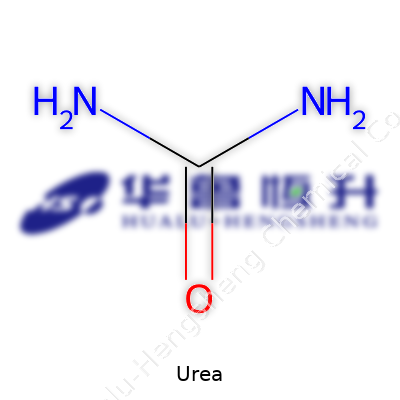
Within our production facilities, urea stands as a primary output—pale, crystalline, highly soluble in water. Despite its simple molecular structure—(NH2)2CO—urea supports entire value chains for fertilizers, animal feeds, resins, and beyond. Our tanks store it in solid prill, granule, and sometimes liquid forms, optimizing output based on transport infrastructure and end uses. Urea’s ability to deliver concentrated nitrogen in an economical, manageable form keeps it central to modern agriculture and industry. Producers keep a sharp eye on purity levels, especially when shifting between agricultural, technical, or medical-grade specifications.
Anyone who works closely with urea notices its white, odorless appearance and non-hygroscopic crystals. The melting point sits around 133 °C, beyond which urea decomposes rather than boils, giving off ammonia and isocyanic acid. This trait affects how we design storage—ventilation is critical in areas prone to heat spikes. Urea dissolves easily in water, forming a neutral solution near pH 7, and resists many organic solvents. Solid storage gives good shelf life, but moisture can eventually cause caking or slow decomposition, so handling systems need to stay dry and protected. It doesn’t ignite or support combustion, reducing some safety risks compared to other nitrogen sources.
Quality control experts at our plant uphold international standards, keeping biuret, aldehyde, and free ammonia content inside tight limits. Agricultural grades stay above 46% nitrogen by weight. Dust levels and particle distribution matter too, especially for spreading machinery on farms. We label with detailed batch numbers, origin, manufacturing date, and relevant precautionary symbols. Each bag or container moves with documentation that reflects our track record and compliance—a non-negotiable point for buyers, regulators, and our own reputation.
Factory-scale urea production hinges on two key inputs: ammonia and carbon dioxide. Most major sites integrate urea plants with upstream ammonia synthesis to cut costs and emissions. The main reaction unites these feedstocks under moderate pressure and a temperature just above 130 °C. First, ammonia reacts with carbon dioxide to form ammonium carbamate. This intermediate then dehydrates, yielding urea and water. A train of separators, condensers, and distillation columns recycle unconverted reactants, reclaiming value and reducing waste. Fine-tuning pressure, temperature, and residence time has let us squeeze even small improvements out of mature equipment—saving energy, reducing losses, and raising final product purity in measurable ways.
Experience teaches that while urea features simple chemistry, its amide bonds open multiple reaction routes. Mixing with acids generates ammonium salts, useful for local nitrogen releases. In formaldehyde’s presence, urea forms resins and adhesives with applications in wood processing and paper finishing. Laboratory research still uncovers new modifications—catalysts that foster slow-release granules or additives that slow down nitrogen volatilization in soil, stretching fertilizer impact and easing environmental worries. Urea participates in the synthesis of barbiturates, hydrazine, and even as a reducing agent for nitrogen oxides in diesel exhaust systems, showing that even old molecules can answer new demands.
Inside technical circles, we reference urea as carbamide, carbonyl diamide, or by its trade names in the resin market. Local labels and regulatory documents sometimes list synonyms such as isourea, or, in older literature, “urea crystal.” Product tags reflect the intent—fertilizer-grade, feed-grade, technical, or medical grade—with distinctions shaped by the tightness of specification and the rigor of contaminant testing.
Routine works best in safety—operators know the risks and handle urea with all the right equipment. Contact with skin or eyes stays low-risk, but dust in high concentration calls for masks and goggles. Ventilation and regular clean-ups inside warehouses reduce dust build-up. Spill control focuses more on minimizing slips than urgent toxic threats—urea runoff, though not acutely dangerous, does add nitrogen loads to waterways and needs duty of care under environmental permits. Employee training now includes not only personal protection but responsible water management, given the scrutiny over nitrate pollution and potential runoff concerns.
Sold in the millions of tons annually, urea forms the backbone of nitrogen fertilizer strategies worldwide. Crops ranging from wheat and corn to rice and cotton gain from its efficient nutrient delivery. Beyond the field, urea goes into cattle feed as a source of non-protein nitrogen, resin factories for making particleboard, and chemical plants synthesizing intermediates for pharmaceuticals and polymers. One of the newer roles sees urea as the key ingredient in diesel exhaust aftertreatment—selective catalytic reduction—where its aqueous solution cuts nitrogen oxide emissions. Farms, factories, and engine manufacturers all count on regular, high-quality supply, tying local demand directly to our plant operations.
R&D teams within our company keep pushing for breakthroughs. Efforts focus on energy savings in production, lowering the pressure and temperature needed for synthesis, and capturing more value from unavoidable byproducts. A big push involves adjusting surface coatings on bulk urea, crafting slow-release products that work with plant needs and local climates. Laboratory research looks at additives—some cut greenhouse gas loss, others blend in micronutrients or bioprotection agents. Investments in sensor-driven process control yield better consistency, and molecular simulation speeds up catalyst trials. Collaborations with universities accelerate the trials for new feedforms and foliar sprays, aiming to tune fertilizer dosing and cut leaching losses. No process remains static—market and environmental pressures demand steady evolution.
Over the years, toxicologists have described urea as low-risk for acute poisoning in humans and animals at the exposure typically encountered in agriculture and manufacturing. Swallowed in large amounts, it does cause discomfort and metabolic disruption. Chronic exposure to dust, while not classified as a carcinogen, orders a need for worker protection and routine medical monitoring in the plant. In freshwaters, excessive urea runoff breaks down to ammonia and nitrates, which in turn fuel algal blooms and reduce oxygen levels—something regulators and engineers must address with containment, plant upgrades, and improved soil management practices. Trends in toxicology examine breakdown pathways and metabolite impacts in a deeper way now, reflecting both public expectations and stricter environmental rules.
Growth in urea production feels certain, but its path faces technical and environmental challenges. World population rise keeps food demand growing, and more efficient fertilizer use will stay central in coming decades. Our teams push designs for urea with additives that stretch nutrient life, reduce leaching, and lower greenhouse impacts—shifting away from ‘more’ to ‘better’. New chemical uses—hydrogen storage, resin formulation for greener materials, even emerging battery chemistries—offer ways to stretch the envelope further. Changing regulations on nitrogen emissions will keep shaping production practices; tighter standards shut down some older plants and reward those that cut energy, water, and material loss. We see opportunity in digital plant controls and precision agriculture partnerships, letting us support smarter fertilizer management on the field as well as in the factory. In our factory halls and research labs, the story of urea remains unfinished—a simple molecule that continues to drive innovation, feed communities, and face the pressures of a changing world.
As a producer, I see urea flow straight from our finishing towers, warm and clean. Its popularity didn’t happen by chance. Wherever crops stretch to the horizon, urea often finishes the job, feeding the acres that put food on tables. Most folks know urea as the backbone of agricultural fertilizer. It works because it’s packed with nitrogen. Farmers trust it, not because it's trendy, but because it keeps fields productive season after season.
Agriculture doesn’t own the rights to urea’s usefulness. Take a walk through an industrial yard or tour a diesel workshop. You’ll probably notice bulk tanks labeled “DEF” or Diesel Exhaust Fluid. Urea makes that fluid work. Combustion engines running on diesel produce harmful nitrogen oxide gases, and when DEF gets injected into the exhaust, harmful compounds turn into harmless nitrogen and water vapor. The global push for cleaner air turned urea into an answer, and demand won’t slow as more trucks and buses roll out with modern engines.
Big chemistry plants depend on urea too. They convert it into resins used in plywood, particle board, and laminates. I’ve watched formaldehyde react with urea under carefully controlled conditions, giving adhesive strength to engineered wood. Builders and furniture makers rely on that bond every day. If you’ve run your hand along a sturdy kitchen cabinet or new office desk, you’ve probably felt the downstream results of this process. We can’t build efficiently without it.
People often ask why urea caught on in so many sectors. It starts with access. Large-scale ammonia and carbon dioxide synthesis keep us supplied. Every day in the plant, the careful mix and temperature control make the difference between a quality batch and wasted resources. Mishaps here ripple right into missed planting seasons or delayed product launches.
The market isn’t without challenges. Urea releases ammonia once in soil or when heated in engines. Ammonia boosts crop yields, but sometimes too much of it escapes into the environment. My team is always pushing for more precise application methods on farms, helping growers apply just what's needed. Engineers also work to perfect DEF dosing to avoid excess. These steps don’t just respond to regulations. They reflect a push to leave the environment in better shape for the next generation.
Innovation keeps creeping in: controlled-release coatings, better blending for specialty fertilizers, and optimized storage for bulk customers. We’ve invested in digital platforms for inventory monitoring, so no one gets caught without stock during busy seasons. Partnerships with universities let us train the next wave of chemists and agronomists, pooling real-world data to fine-tune processes and applications.
From our production line, I see urea as more than a commodity. Its story links science, everyday hard work, and the pulse of global markets. Decisions in the control room echo far beyond the fence, showing up wherever food is grown, goods are built, or diesel engines work through the night. Our daily efforts—to improve quality, manage challenges, and support responsible use—grow from this understanding. Urea earns its place not because it’s the easiest or cheapest answer, but because it keeps meeting real, evolving needs.
Growing up around chemical plants, you quickly realize that making urea means more than mixing ingredients. It starts with natural gas and air, two of the most ordinary things you’ll find. But the equipment, know-how, and experience needed for this job call for years of patience and plenty of stubborn troubleshooting. On any given day, hundreds of people work together just to turn these basic resources into a finished product that ends up as plant nutrition all over the world.
Many news stories only touch on the surface: natural gas comes in as feedstock, and urea leaves as a white solid. There’s a lot in between. First off, natural gas gets purified. Pipes stretch as far as the eye can see inside a plant, filled with catalysts and scrubbers working nonstop to get rid of sulfur and other contaminants. Any leftover impurities can poison the next steps. Keeping the system clean has become second nature for seasoned workers—any slip can ruin an entire batch, waste resources, or even cause dangerous incidents.
Hydrogen makes up the core of the process. We pull it out of the natural gas through a process called steam reforming. Catalysts supported by decades of engineering experience help break the bonds in methane and bond it with steam. Some days, the plant runs so hot that team members must monitor everything by the minute. Safety is not just a checklist—it’s a matter of survival for both workers and machinery.
Next up is the air, which holds about 78% nitrogen. Separating usable nitrogen doesn’t happen by chance. Compressors roar, chilling and squeezing massive volumes to extract the nitrogen we need. Ammonia synthesis brings everything together, a step which owes its existence to historical pioneers but still draws on the lessons every shift teaches. In ammonia reactors, pressure runs as high as 200 times atmospheric and temperature can break 400°C. Any flaw in seals, gaskets, or instrumentation means headaches, downtime, and a waste of expensive resources.
Turning ammonia and carbon dioxide into urea gets a lot of attention in classrooms, but in the field, it means handling tight reaction conditions. Carbon dioxide comes as a by-product from hydrogen production, so there’s no escape from making sure nothing goes to waste. Operating reactors at close to 180°C and high pressure keeps us on our toes. It’s a delicate balance—stray too far in any direction and production efficiency takes a hit. Technicians and engineers tweak valves, read meters, and put their trust in well-designed systems. That’s the only way to hit high yields while keeping costs under control.
Dry urea comes last. Granulation transforms the molten product into hard, manageable pieces. Here, dust can become a nuisance, causing build-up and product loss. Routine cleaning keeps things running. Every finished batch undergoes inspection for quality—caking, strength, and size all matter in the eyes of farmers and industrial buyers.
Safety and environmental performance matter most. Technology improvements keep reducing emissions and increasing efficiency, but real progress always comes from the teams who understand why every step matters, and from managers who invest in training and equipment upgrades, not just chasing numbers. With pressures from energy markets and global food needs, producers must carry the weight of getting it right, every day.
From years of producing urea for fields across various climates, I've seen its big impact, both in yields and in farming practices. Urea gives crops a boost by supplying nitrogen, a nutrient plants crave for strong growth. In regions with intensive farming, yield improvements appear obvious after consistent use. Safe application, though, depends on how and when farmers use it.
Urea is the most widely used solid nitrogen fertilizer worldwide. It dissolves quickly and enters the soil, where enzymes convert it to forms plants absorb. It’s not toxic to people, pets, or the environment at the rates used in agriculture. The safety bar sits high. As long as it's stored dry and handled with clean equipment, urea won’t cause burns or other direct health issues. People sometimes worry because it’s a “chemical,” but this molecule naturally results from protein breakdown in animals, including humans.
Risks tend to come from poor practices, not from the fertilizer itself. Dumping too much in one area can burn roots or run off into nearby waterways. Both farmers and manufacturers have a responsibility to keep rates in balance. Heavy rains soon after spreading may carry some nitrogen into rivers. To reduce leaching, farmers can place urea deep in the soil or time the application right before a rain is expected, not after a storm has already begun.
Years of working with hands-on growers taught me that safe use comes from education, not scare stories. Soil tests guide how much nitrogen a field truly needs. Overdosing wastes money and harms nearby lakes and streams. Proper timing, good placement, and regular monitoring go further than any government rule. We always urge customers to follow proven agronomic advice and to adjust plans for their own fields, weather, and crop demands. Storing fertilizer away from water sources and spreading it with calibrated equipment is a matter of routine for most today.
Much debate swirls around fertilizers and the environment. Soil scientists have documented that misplaced or over-applied urea can let nitrogen escape into the air as ammonia or run off into rivers. That’s not just an environmental issue; it’s also a waste for every farm involved. The industry worked hard to develop coatings and stabilizers that reduce losses to air and water. Newer formulations hang in the soil longer so crops can absorb more nitrogen and less escapes.
Not every farm will choose urea for every crop. Some switch to ammonium nitrate or organic sources after weighing costs, risks, and the exact soil type. As manufacturers, honest conversations about new products and ongoing research help the whole supply chain—growers, suppliers, and scientists—keep pushing for better outcomes. We welcome experiments with application rates, soil sensors, and other novel approaches that cut down on waste and risk.
Urea, if applied using guidelines shaped by decades of scientific research and local know-how, stands as a safe and valuable ally for agriculture. Problems show up when shortcuts replace good habits. The best outcomes always trace back to sound field practices, solid advice, and a commitment to continuous improvement. Experience tells us that with the right education and products, growers can deliver more food with less risk, building trust in every bag we make.
At our manufacturing facilities, we deal with thousands of tons of urea every year. Experience teaches a manufacturer fast—urea rewards good storage habits, punishes carelessness. Poor storage leads to caking, breakdown, environmental loss, unhappy customers, and ripple effects right back to the production line. So, let’s talk about what’s behind effective urea storage and why manufacturers like us care so much about getting it right.
Urea absorbs moisture from the air. If humidity stays unchecked, the product clumps together and forms solid blocks. This ruins flowability, complicates packaging, and frustrates customers who need clean, free-moving prills or granules for blending or spreading. We monitor relative humidity inside our warehouses using simple sensors and keep the levels in check with ventilation, well-sealed storage, and rapid movement of product through the facility. We take humidity seriously because it directly impacts quality.
Intense heat or sharp temperature swings aggravate the moisture problem and speed up the rate at which urea breaks down. Prolonged high heat can accelerate the release of ammonia, especially if moisture is present. Good insulation and shaded storage make a clear difference, so we invest in solid roofing and minimize exposure to direct sunlight. Open piles or exposed bags don’t last and drive up losses—not just for us, but for everyone down the supply chain.
Bulk urea and bagged urea offer different challenges. Loose product needs impermeable ground covers—concrete or well-built floors—to prevent absorption of ground moisture. We place bulk heaps on wooden pallets or direct on concrete, never directly on dirt. Bags should stay stacked under roofs, off the ground, and away from walls where condensation can form. Tight wrapping and timely rotation help reduce the risk of product breakdown or contamination from dust and debris.
Urea reacts with acids, alkalis, and chlorides. Storing it far away from these chemicals holds more importance than many realize. Accidental cross-contamination can cause unexpected chemical reactions and ruin batches. In our plant, clear signage and physical separation between products prevent mistakes. Clean equipment reduces product recalls and cuts the risk of fertilizer mixtures going wrong at farms or in other applications.
Every storage area runs with strict no-smoking policies and regular fire safety checks. Urea itself won’t ignite easily, but heat sources, electrical faults and improper storage around incompatible chemicals increase risk factors. Good lighting, clear walkways, and fast reporting keep staff safe and the product secure. Skimping on these basics has never saved money in the long term.
Over the years, we learned not just from our successes, but from shipments lost to rain leaks, containers damaged in transit, and overlooked maintenance. The lesson stays the same: storage and handling determine quality as much as manufacturing process. Listening to feedback from our clients—agronomists, dealers, farmers—helps us refine our storage protocols. We hold regular audits and update our practices as technology and standards move forward.
The cost of doing it right pays for itself every season. Urea lasts longer, stays in flowable form, and keeps nitrogen content high if it’s stored cool, dry, clean, and tightly packed. Manufacturers have the most at stake—it’s our job to push for the high standards that ensure the rest of the supply chain gets reliable product. Big or small, every operator who handles urea carries the responsibility to keep it safe, dry, and away from trouble. No shortcuts. No lucky breaks. Just straight-up good practice, learned on the factory floor.
Every year, we produce thousands of tonnes of urea, shipping it to farms near and far. People often ask us, “What’s the best way to use it?” From our view at the plant, it’s clear that the way growers handle urea in the field makes a real difference in their yields and soil health.
Urea delivers nitrogen, no question, but much of that value depends on how it meets the soil. Our experience shows that simply tossing urea on top of dry ground right before a sunny spell leads to nitrogen loss. Sun and wind push ammonia gas up into the air, leaving little for the plants. Farmers who get better results usually broadcast urea just before rain or use incorporation methods. Light rain soon after spreading draws urea into the soil, putting the nitrogen where roots can reach it.
Incorporation—mixing urea into the soil by light tillage or following it with irrigation—also works. This isn’t just theory. Over years supplying both dry and irrigated regions, we've heard from growers who see stronger stands and steadier green color in crops when they take this extra step. Those who skip it complain about erratic plant growth and wasted input costs.
Every hectare draws a different nitrogen need. Blanket rates treat fields as flat surfaces, but soil tests often reveal hidden patterns. Some patches already have enough nitrogen, while others run short. From a manufacturer’s angle, providing the urea in consistent granules for precise spread is only half the job; real savings and productivity come from proper rate setting on the farm. Simple tools like in-season leaf color charts or basic soil nitrate tests can help avoid overloading or starving crops. A grower who dials in custom rates rarely regrets the effort, reporting not just higher yields but also less weed pressure and improved crop quality.
We’ve seen a lot of debate about inhibitors, blends, and slow-release products. The truth is, nothing substitutes for timely application and matching practices to local climate. In wetter regions or cooler months, volatilization runs lower, so surface application works better. In hot, dry spells, nitrogen loss rates spike, making careful planning critical. Limiting urea exposure above ground, or combining with stabilizers, saves more nitrogen for the plants. Our technical staff spend plenty of time helping customers track these seasonal swings and fine-tune decisions in real time.
As manufacturers, we pay close attention to feedback. Customers tell us that urea delivers best value only when integrated with the full management plan—from crop rotation to tillage to irrigation. Chasing bumper yields starts long before fertilizer hits the field, but it always benefits from a working knowledge of how nutrients behave under local farm conditions. Reliable yield responses come not from chance, but from marrying good chemical inputs with hands-on understanding.
We’ll keep manufacturing to the highest standards, but we’ve seen firsthand that success with urea begins with timing and care on the farm, not just what leaves our gates.